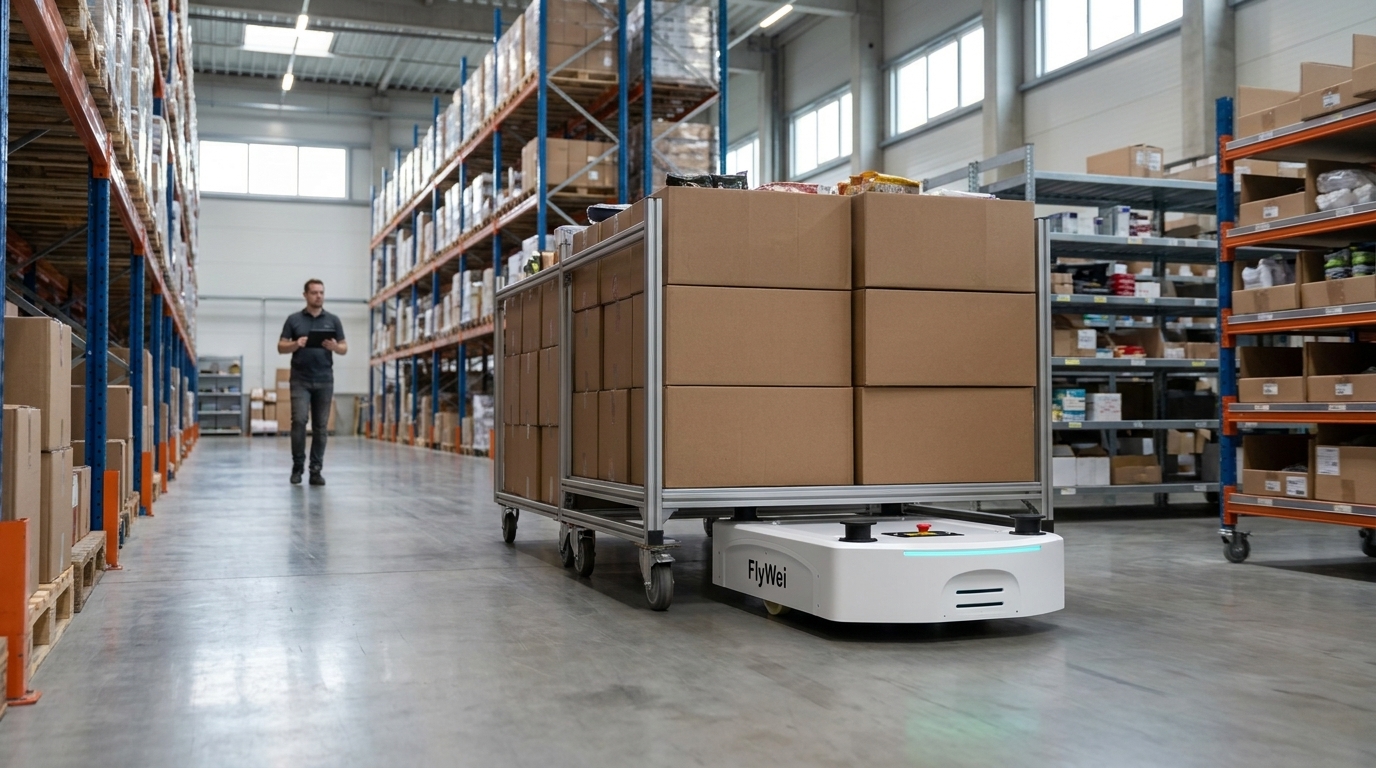
I robot mobili autonomi sono veicoli a batteria, guidati da sensori, che movimentano pallet, contenitori e gabbie all'interno di un centro di distribuzione al dettaglio del UK senza conducente, ricevendo istruzioni da un gestore di flotta centrale anziché da un supervisore di turno. Il Performance Tracker di Logistics UK ha registrato che il 67% degli operatori al dettaglio multisito ha classificato la disponibilità di manodopera come il più grande rischio di interruzione nel 2026, accelerando l'adozione di robot mobili autonomi nei centri di distribuzione anche mentre i volumi di generi alimentari e multicanale spingevano la produttività dei DC del UK oltre i picchi del 2019. Per un Direttore della Supply Chain che gestisce una struttura di 400,000 sq ft nelle Midlands a Magna Park o Daventry, ciò significa che la copertura per l'alta stagione è ora un rischio a livello di consiglio di amministrazione piuttosto che un problema di turni, e la questione non è più se introdurre l'automazione mobile, ma come farlo senza vincolare la pavimentazione a un singolo fornitore o bloccare un picco del Q4 attraverso una finestra di messa in servizio di sei mesi.
Perché i DC al dettaglio del UK si stanno rivolgendo ai robot mobili autonomi nel 2026
La distribuzione al dettaglio del UK si trova all'intersezione di tre pressioni strutturali: una riduzione permanente dei conducenti di carrelli controbilanciati e retrattili dal 2020, il raddoppio del numero di SKU di generi alimentari e multicanale nella maggior parte dei DC nazionali in cinque anni, e un'impronta di pavimentazione completamente impegnata nei grandi parchi delle Midlands. Magna Park, DIRFT e SEGRO East Midlands Gateway hanno effettivamente zero metri quadrati rimasti per espandersi orizzontalmente. La guida al trasporto sul posto di lavoro dell'HSE registra che i carrelli industriali a motore rimangono la singola causa più grande di infortuni mortali e gravi nel magazzinaggio del UK, il che pone ogni Direttore della Supply Chain nella stessa posizione: maggiore produttività dallo stesso edificio, con meno conducenti, riducendo piuttosto che aggiungendo interazioni pedone-veicolo.
L'automazione fissa, sotto forma di sistemi a navetta, smistamento a nastro monolitico o griglie di stoccaggio a cubo, risponde in parte a questa esigenza, ma vincola la pavimentazione a un unico modello operativo per la vita di ammortamento dell'asset. Questa scommessa è diventata più difficile da difendere man mano che i profili degli ordini multicanale si spostano all'interno di un singolo ciclo di pianificazione: un picco che nel 2023 era del 70% di prelievo a cassa e del 30% di prelievo a pezzo può diventare 50/50 entro il 2026. I robot mobili autonomi sono attraenti proprio perché consentono a un Direttore della Supply Chain di scalare la capacità zona per zona e riconfigurare il mix di flotta man mano che il profilo degli ordini si sposta, senza perdere gli asset acquistati l'anno precedente. La tecnologia ha superato la soglia di prontezza per il commercio al dettaglio perché lo strato di orchestrazione, sotto forma di gestori di flotta VDA 5050, routine di batterie a scambio rapido e scanner di sicurezza allineati a BS EN, ha raggiunto l'hardware.
Le tre leve che trasformano un'introduzione in un progetto
Leva 1 — Implementazione zona per zona, non una sostituzione "big-bang" (operativa)
La ragione più comune per cui l'automazione mobile di magazzino fallisce il suo caso aziendale è l'ambito: il team ha previsto un unico passaggio per l'intero edificio quando l'edificio aveva tre profili di flusso di lavoro distinti. Il modello di successo del 2026 nei DC al dettaglio del UK è l'opposto. Scegliere il flusso a costo più elevato e a variabilità più bassa, tipicamente lo stoccaggio di pallet dal molo alla scaffalatura o il prelievo di fine linea da un punto di smistamento, automatizzarlo con una singola flotta di carrelli elevatori autonomi, dimostrare lo SLA per dieci settimane, quindi aggiungere la zona successiva. FlyWei ha messo in servizio questo tipo di zona a flusso singolo in 8-12 settimane; lo stesso operatore poi sovrappone AMR a sollevamento latente per la movimentazione di contenitori verso le postazioni di prelievo manuale nella seconda zona, condividendo il gestore di flotta M4 e il caso di sicurezza. Il vantaggio per un Direttore della Supply Chain è che la prima zona ha ripagato prima che la seconda zona diventi operativa, rendendo la seconda estensione del leasing difendibile a livello di consiglio di amministrazione piuttosto che speculativa.
Leva 2 — Orchestrazione indipendente dal fornitore tramite VDA 5050 (tecnica)
I DC al dettaglio che oggi si vincolano a un singolo fornitore di hardware sono i DC al dettaglio che pagheranno una penale di margine del 20-30% in cinque anni; l'alternativa è rendere il gestore della flotta l'asset strategico, non il telaio. BSI-aligned VDA 5050 è l'interfaccia aperta che consente a un livello di orchestrazione di comunicare con AMR di più OEM; lo stesso gestore di flotta invia un transpallet, un puck a sollevamento latente e un carrello retrattile contro la stessa onda di prelievo del WMS. La piattaforma M4 di FlyWei implementa VDA 5050 in modo nativo e si integra con il WMS aziendale esistente dell'operatore tramite interfacce standard, in modo che il WMS continui a gestire l'inventario e le onde mentre M4 gestisce le decisioni sul traffico in tempo reale. RDS, lo strato di dispacciamento robot di FlyWei, gestisce il routing secondo per secondo, decidendo quale sollevamento ogni robot effettua, quale slot di ricarica si libera successivamente e come si sviluppano i rendimenti tra i corridoi durante un picco, senza costringere il WMS a sapere nulla di tutto ciò. Il risultato è che l'aggiunta di una nuova variante di robot nel terzo anno è una modifica della configurazione, non un progetto di capitale.
Leva 3 — Conformità come pacchetto di prove documentate, non come ripensamento (regolamentare)
Gli auditor del UK accetteranno una flotta AMR solo se l'operatore può presentare un pacchetto di prove per zona che si allinei a ISO 3691-4 (carrelli industriali autonomi) e al Provision and Use of Work Equipment Regulations 1998 (PUWER). Questo pacchetto di prove ha sei componenti fissi per zona: una valutazione documentata dei rischi, registri dei test di arresto dello scanner di sicurezza allineati a BS EN, un piano di segregazione dei pedoni con corsie di esclusione tracciate, una procedura per il traffico misto con MHE manuale, una procedura di arresto di emergenza e ripristino, e un esame approfondito annuale ai sensi del LOLER per gli asset di sollevamento. FlyWei rilascia questo pacchetto come parte del passaggio di consegne della messa in servizio in modo che il Direttore della Supply Chain possa presentarlo direttamente alla funzione HSE interna e agli assicuratori; l'alternativa, l'assemblaggio del pacchetto a posteriori, ritarda tipicamente l'avvio di sei-dieci settimane per zona ed è la ragione più comune per cui un progetto pilota slitta in un secondo anno finanziario.
Come i robot mobili autonomi si confrontano con l'automazione fissa in un DC al dettaglio
| Fattore decisionale | Flotta di robot mobili autonomi | Navetta o ASRS a cubo | Nastro trasportatore e smistatore monolitico |
|---|---|---|---|
| Capex indicativo per zona | £0.6m a £1.4m, o leasing di 3, 5, 7 anni | £8m a £25m, un unico passaggio | £5m a £15m, un unico passaggio |
| Tempo al primo throughput | 8 a 12 settimane per zona | 14 a 24 mesi | 10 a 18 mesi |
| Modifica della pavimentazione | Nessuna, pavimento TR34 come costruito | Maggiore: pali, tagli, rifusione | Maggiore: tagli e fosse nella pavimentazione |
| Riconfigurazione quando il profilo SKU cambia | Giorni, all'interno del gestore di flotta M4 | Mesi, con il fornitore in loco | Trimestri, con ingegneria meccanica |
| Elasticità di picco (unità extra solo per il Q4) | Il noleggio di AMR extra è comune | Non possibile | Non possibile |
| Percorso di conformità | ISO 3691-4 + PUWER + BS EN | Direttiva Macchine + PUWER | Direttiva Macchine + PUWER |
| Ritorno tipico (singolo turno) | 18 a 30 mesi | 4 a 7 anni | 3 a 6 anni |
I robot mobili autonomi FlyWei che operano sotto uno strato di orchestrazione VDA 5050 possono essere messi in servizio in 8-12 settimane per zona e scalati da 6 a 60 unità senza rifare il cemento o ri-licenziare il WMS dell'operatore.
Cosa fa FlyWei per un Direttore della Supply Chain al dettaglio del UK
FlyWei progetta, fornisce e integra flotte di robot mobili autonomi per i centri di distribuzione al dettaglio del UK con un unico contratto responsabile. Siamo il team di ingegneri in loco, non un rivenditore che passa l'operatore a una terza parte. Il punto di partenza è un sopralluogo di 30 minuti seguito da un modello di dimensionamento della flotta che prende i dati delle onde di prelievo del WMS dell'operatore e calcola a ritroso il numero di AMR, l'ingombro di ricarica e la licenza del gestore della flotta necessari per raggiungere lo SLA target entro una stagione di picco. Per la maggior parte dei DC nazionali nelle Midlands e nel Sud, si tratta di sei-dodici AMR nella prima zona, scalando a trenta-sessanta in tre zone su una roadmap di 18 mesi. FlyWei fornisce il gestore di flotta M4 e lo strato di dispacciamento RDS, li integra con l'ERP e il WMS esistenti dell'operatore, gestisce l'integrazione di sicurezza BS EN e rilascia il pacchetto di prove ISO 3691-4 e PUWER al momento della messa in servizio. Gli ingegneri con sede nel UK coprono la flotta per tutta la vita dell'asset, inclusa l'ispezione approfondita annuale LOLER. L'accordo commerciale è o l'acquisto capex o un leasing a servizio completo di 3, 5 o 7 anni che allinea il costo alle ore di lavoro effettive.
Domande frequenti
I robot mobili autonomi sono diversi dagli AGV?
Sì. Gli AGV seguono un nastro magnetico o un filo fisso e necessitano di modifiche alla pavimentazione per cambiare il percorso; gli AMR utilizzano SLAM a bordo e un gestore di flotta, quindi il percorso è una modifica della configurazione nel software. In un DC al dettaglio del UK, questa differenza è la differenza tra un rifacimento del pavimento di sei mesi e un re-routing del martedì mattina.
Quanto tempo ci vuole per mettere in servizio una flotta AMR in un DC al dettaglio del UK?
Otto-dodici settimane per zona, dal sopralluogo al throughput in tempo reale, per una tipica zona di 6-12 robot. Il vincolo raramente sono i robot; è la finestra di integrazione con il WMS esistente dell'operatore e il tempo necessario per assemblare il pacchetto di prove ISO 3691-4.
Quali standard si applicano all'operazione AMR nel UK?
ISO 3691-4 (carrelli industriali autonomi) definisce il caso di sicurezza per i robot stessi; PUWER 1998 regola come vengono utilizzati e mantenuti; LOLER 1998 copre qualsiasi funzione di sollevamento; e gli scanner di sicurezza allineati a BS EN forniscono le prove documentate delle prestazioni di arresto. La guida HSE PUWER stabilisce i doveri generali dell'operatore.
Gli AMR possono lavorare insieme ai carrelli elevatori manuali?
Sì, con una procedura documentata per il traffico misto, corsie di esclusione pedonale tracciate e scanner di sicurezza allineati a BS EN su ogni AMR. La procedura per il traffico misto è il documento più esaminato nel pacchetto di audit, e FlyWei lo rilascia come parte della messa in servizio.
Gli AMR necessitano di un WMS separato, o si integrano con quello esistente?
Si integrano. M4 agisce come gestore di flotta e scambia le attività di prelievo e stoccaggio con il WMS aziendale esistente dell'operatore; il WMS continua a gestire l'inventario e le onde, M4 gestisce le decisioni sul traffico in tempo reale e RDS gestisce il dispacciamento secondo per secondo.
Qual è il ritorno tipico su una flotta AMR in un DC al dettaglio del UK?
Diciotto-trenta mesi su un singolo turno, scendendo a dodici-venti mesi su un doppio turno. Il ritorno si accorcia ulteriormente su una flotta in leasing perché il leasing allinea il costo alle ore di lavoro effettive piuttosto che al piano di ammortamento.
Un leasing di 3 anni può sostituire il capex iniziale per gli AMR?
Sì. I contratti di leasing operativo di 3, 5 e 7 anni di FlyWei sono progettati per i DC al dettaglio che desiderano mantenere la flotta fuori dal bilancio, con copertura completa per ingegneria, ricambi e l'ispezione approfondita LOLER inclusa nel pagamento mensile. I team di approvvigionamento preferiscono tipicamente la struttura di 5 anni come impostazione predefinita.
Se la resilienza della manodopera e l'elasticità del picco del Q4 sono nel vostro registro dei rischi per il 2026, il passo successivo con il minor attrito è un modello di dimensionamento della flotta basato sui vostri dati WMS, tipicamente due giorni di lavoro per il vostro team e una visita in loco per il nostro.
Richiedete un modello di dimensionamento della flotta e una stima del ROI per il vostro DC o esplorate le strutture di leasing di 3, 5 e 7 anni che abbiamo progettato per i centri di distribuzione al dettaglio del UK.
Ingegneri con sede nel UK, nessun obbligo, risposta entro un giorno lavorativo.