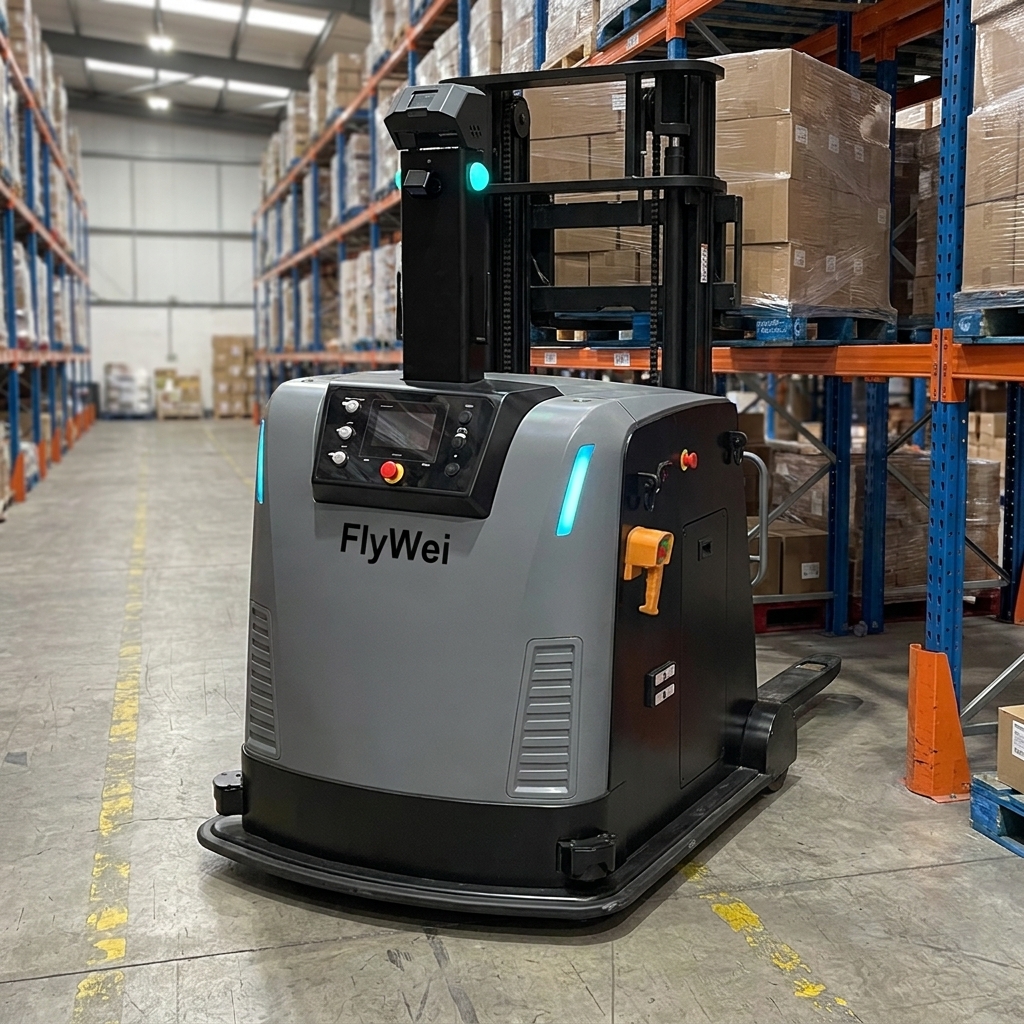
From a 3PL mixed-shipper aisle to a −25°C cold store, a Tier-1 takt line and a parts-wash bay — what closes the deal is orchestration, not the truck.
It's the last Monday of June, and the warehouse director's diary already runs through to mid-October. Q4 ramp meetings start in a fortnight. The agency invoice arrived on Friday and the unit rate climbed again. Two pallet ramp-ups have been verbally promised to incoming retail shippers, both want their own KPI dashboard, both want it yesterday. The HSE audit window opens in September, the LOLER inspector has already booked a Thursday, and finance wants the five-year IRR on a single side of A4 by week three of July. None of these problems are about the forklift you buy. They are about whether the layer above the forklift can answer them all from one screen.
Across this week's five operational reads — a UK 3PL contract floor, two cold stores, a Rhine corridor automotive plant, a Hungary–Slovakia takt line and a parts-wash bay — the lever that closes the deal is the orchestration layer, not the truck.
1. The single pane of glass for mixed shippers
The 3PL playbook this week opens with a problem that nobody on the floor calls "automation". A contract DC running three retail shippers under one roof has three different SLAs, three different cut-off times, and three different KPI packs that the commercial team has to pull, by shipper, before the Monday call. The bid for a fourth shipper is on the desk. The capex committee will look at the IRR over five years before signing anything.
What the supply chain director needs is not a faster forklift. It is the ability to sequence mixed-shipper pallet flows across one driverless-truck fleet, under ISO 3691-4, with audit-grade evidence for every move — and to do it without buying three stacks of incompatible software glued together by a service-level agreement nobody can read.
This is where the orchestration layer is the unit of purchase. One fleet manager, one task queue, one VDA 5050 status feed, and shipper-tagged pallet moves that fall straight into one dashboard. The trucks underneath can be a mix of counterbalance, reach and tow — what matters is that they answer to one brain.
A reasonable working assumption for a 100,000 sqft contract DC: eighteen mixed-shipper aisle hours a day, agency premium currently running about £6.40 above standard hourly rate at peak, a Q4 weekend penalty schedule that costs four figures per missed cut-off. Drop those into the IRR model with an operating-lease line instead of capex, tag every move by shipper at the fleet manager rather than at month-end, and the five-year curve looks very different — both to the commercial director and to the capex committee.
Vendor-meeting question: "Show me the shipper-by-shipper KPI export off your fleet manager. Live data, not a screenshot."
2. The thirty-month cold-chain payback
Two cold-chain reads landed this week and they tell the same story from different ends of the corridor. From the supply chain director's perspective, multi-site chilled DCs in the UK need a defendable mixed-fleet payback model that survives capex committee challenge — even with agency-shift premiums climbing every quarter. From the operations director's perspective, sub-zero throughput is collapsing every shift to driver attrition, mandatory freezer-hour rotations and cold-battery duty loss.
The arithmetic that links the two: a mixed AMR-and-driverless-forklift fleet running at least eighteen hours a day across chilled and ambient zones typically lands inside a 30-month payback in a UK cold-chain estate. The lever that gets it there is not the cold-rated battery. It is the orchestration layer holding the fleet on task while human pickers cycle out of the −25°C chamber on the 45-minute rotation the regulator expects.
A driverless truck can run pallet moves continuously below −25°C without the mandatory operator rotations that strip ninety productive minutes out of every shift. Multiply that across two cold and two ambient aisles on a single estate and the throughput recovery is not theoretical — it is the difference between hitting a supermarket's 04:30 dispatch window and paying a missed-slot penalty that the chilled-trailer hauler will pass straight back through the variable-cost line.
The mistake most cold-chain capex papers make is to model the fleet as a labour-replacement line item. The defendable model is throughput recovery, plus the agency-line variance, plus the LOLER inspection envelope, with operating-lease finance keeping the IRR intact. The director who walks into committee with the wrong frame loses the room before the deck opens.
Vendor-meeting question: "Give me a UK cold-chain reference that hit payback inside 30 months. I want the utilisation curve, not the brochure."
3. The takt line and the €5,000-an-hour penalty
Two continental reads landed in the same week and they belong together: the Rhine corridor in Eastern France, and the Hungary–Slovakia automotive corridor. Both share an OEM customer at the end of a just-in-sequence line. Both share a takt clock that does not negotiate. Both share a forklift-driver vacancy rate the local labour market cannot close on its own.
The number that the supply chain director and the operations director have both written down: a missed just-in-sequence delivery to a Rhine corridor automotive plant typically costs €5,000 or more per hour, with no upper bound on a serious miss. Multiply that by a four-hour late call-off and the day's margin has gone. Add CSRD Scope 1 reporting pressure on the Eastern France Tier-1 sites and the diesel counterbalance truck is now a board-level disclosure problem as well as a driver problem.
The lever, again, is orchestration. A driverless forklift fleet that holds its position in a takt-driven body shop has to talk to the MES handshake at the head of the line, queue under VDA 5050, and surface its live status alongside the line's andon stack. The truck on its own does none of that. The orchestration layer does all of it. The Hungary–Slovakia corridor read makes the same case from the operations director's chair — three to five plants in the corridor sharing the same driver-shortage curve and the same leasing-versus-EV-capex collision.
Around a quarter of all UK workplace fatalities each year involve transport in or near workplaces — and that pattern repeats across continental automotive manufacturing. Take the diesel truck off the takt line, take the human off the route between the pallet store and the body shop, and the safety case writes itself. Leave the orchestration layer out of the spec, and the takt line still goes down.
Vendor-meeting question: "Show me the MES handshake protocol your fleet manager uses to a Tier-1 line — OPC-UA, MQTT, or a brittle script someone wrote two years ago?"
4. AGV-or-AMR is the wrong question
The board-level navigation decision this week sat on the desk of a 3PL warehouse manager running a contract DC north of 100,000 sqft. Pure fixed-lane deployments lock floor infrastructure into the slab. When the contract churns — and 3PL contracts churn — that infrastructure is stranded. Free-navigation alternatives feel commercially unproven for full-pallet work in a busy aisle.
The operationally correct answer in a 2026 UK distribution centre is no longer binary. It is a fleet that can flip between fixed-lane and free-navigation modes, governed by a single orchestration layer. Fixed-lane behaviour in the high-velocity end of the building, where the choreography is repetitive and the safety case is tight. Free-navigation behaviour in the staging end, where the work is messier and the rack faces move week to week.
This is the four-lever framework worth borrowing into the next vendor conversation: navigation mode (mixed, not single), control architecture (one orchestration layer, not three glued together), safety standard (ISO 3691-4, with the evidence pack), and infrastructure footprint (movable, not poured into the slab). Score every quote against those four. A closed bundled stack that loses you points on lever two and lever four is more expensive over five years than the lower-headline alternative, and it will lose you the next contract bid because the slab is the first thing the next shipper's surveyor asks about.
Vendor-meeting question: "Can your fleet flip a single truck between fixed-lane and free-navigation modes on a live shift, without taking the aisle offline?"
5. The parts-wash bay and the LOLER clock
The engineering plant director's pain this week was very physical: manual loading and unloading of industrial parts-washers and vapour degreasers. The long-cycle machine sits starved while a labourer wrestles a high-centre-of-gravity wet steel-mesh basket out of the wash chamber. The PUWER and LOLER liability is on every shift, on every basket. The HSE inspector has noticed.
The choreography described in the read is straightforward to picture: a driverless forklift pulls a wet steel-mesh basket vertically out of the parts-washer, sets it on a drip station, picks up the next dry basket and feeds the next load into the chamber — no driver, no manual lift, no operator inside the wet zone. The wash machine stops starving. The audit trail writes itself.
The lever, once more, is orchestration. The choreography only works if the truck is taking its instructions from a layer that knows the machine's cycle time, the LOLER inspection date stamped on the basket fixture, and the operator's two-metre safety zone around the bay. A truck without that layer is just a more expensive forklift.
A working number to take into the next plant meeting: the LOLER thorough examination on lifting equipment in this kind of duty falls due every six months, with a written report and a clearly stamped fixture. Build that into the orchestration layer's task graph and the audit becomes a paper exercise, not a forensic one — the truck simply refuses to lift a fixture whose stamp has expired, and the inspector reads the refusal log as evidence rather than as a finding.
Vendor-meeting question: "How does your fleet manager surface the LOLER thorough-examination date for each fixture it lifts, and does it refuse the task when the stamp is out of date?"
The arithmetic
- Eighteen hours of mixed-shipper aisle work a day, on a leased fleet, can absorb agency-line variance worth £6–£8 per truck-hour at UK peak rates.
- A driverless mixed cold-chain fleet typically lands payback inside thirty months on a multi-site UK chilled estate.
- A missed just-in-sequence delivery to a Tier-1 automotive line costs €5,000 or more per hour, with no upper bound on a serious miss.
- Mandatory operator freezer-hour rotations strip about ninety productive minutes out of every −25°C shift — recovered straight back when the truck is driverless.
- A fleet that can flip between fixed-lane and free-navigation modes under one orchestration layer scores higher on a five-year IRR than a single-mode closed bundled stack — because the slab stays free of poured infrastructure when the contract churns.
What to do on Monday morning
- Pull last week's agency-shift premium spend, by aisle, by hour, and put it next to your fleet manager's utilisation curve for the same window. The gap between the two is the orchestration deficit, in pounds.
- Walk the parts-wash bay or the cold-chamber dock with a printed PUWER and LOLER inspection schedule in hand and tick off which lifting tasks have a known fixture-stamp date. The blanks are the orchestration layer's first task graph.
- Book a one-hour conversation with the line engineer who owns the MES handshake — OPC-UA, MQTT, or whatever it is today. The orchestration layer either talks to that handshake on day one, or you are still buying trucks one at a time.
If you want a quiet read of an open-fleet design — single orchestration layer, mixed navigation modes, ISO 3691-4 evidence, leased rather than capex — tailored to your aisle this Q4, reply to this edition or drop a comment below. I'll send the one-page back, no deck.