Products · Robots
AGV forklifts: automated guided and autonomous forklift trucks for UK warehouses
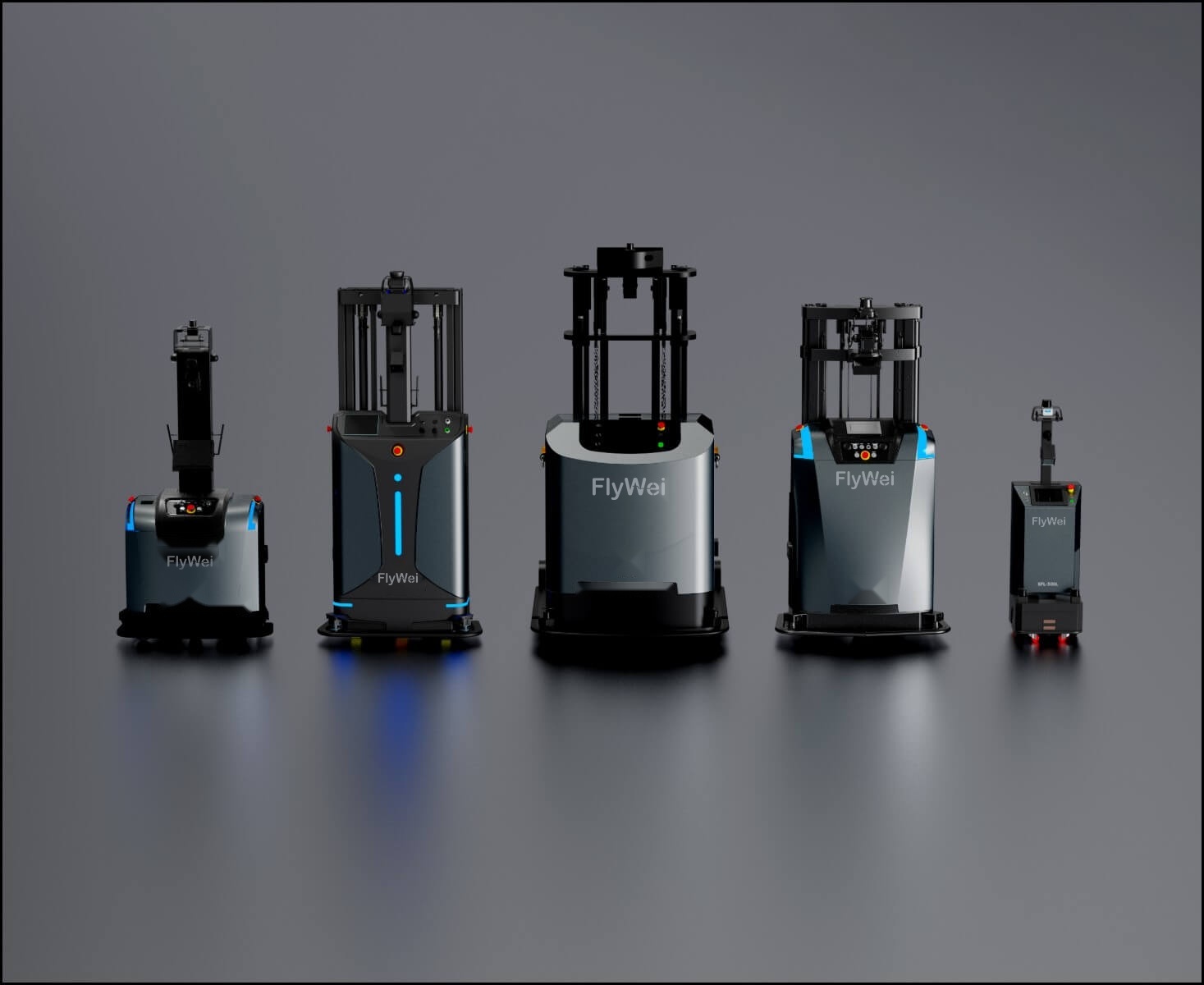
An AGV forklift, also called an automated guided forklift or automated forklift, is a driverless forklift truck that transports, lifts and stacks pallets on its own, using onboard sensors, a map of the building and fleet software instead of an operator. FlyWei integrates 18 autonomous forklift models for UK warehouses, from pallet trucks to reach trucks, 300 to 3,000 kg, navigating by natural-feature SLAM over VDA 5050 with no rails, wires or floor magnets.
Call 020 3576 6910 or book a free, no-obligation UK site survey.
UK-based engineers · reply within one business day


Free UK site survey
Tell us what you move
Send a few details and we will reply with the next step, usually a free UK site survey.
- No charge and no obligation
- Reply within one business day
- Buy, lease over 3, 5 or 7 years, or hire
Prefer to talk? Call 020 3576 6910Monday to Friday, 9 am to 5 pm
18 AGV and automated forklift models in four classes
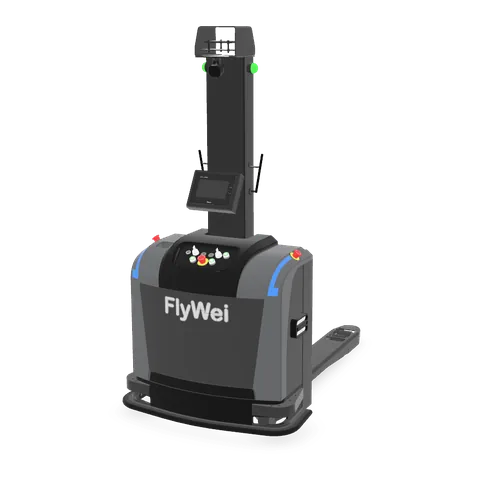
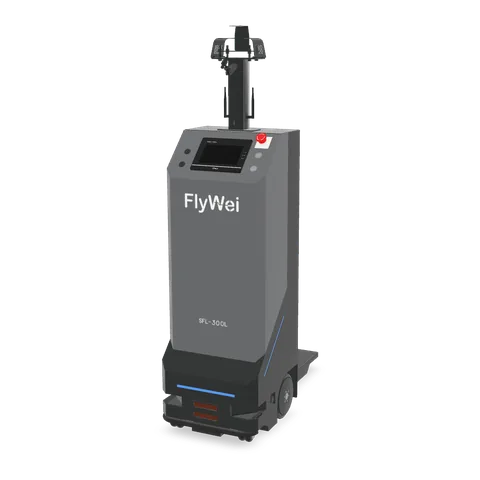
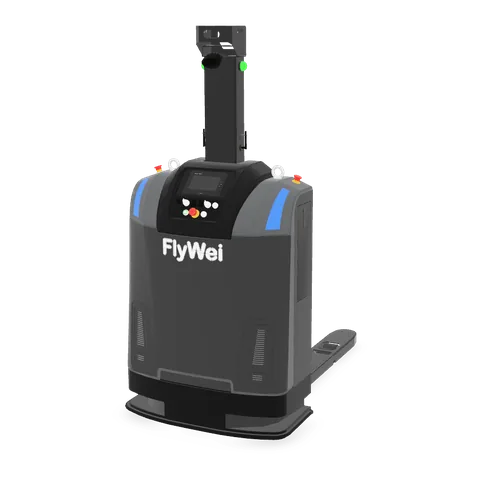
Pallet trucks, pallet stackers, counterbalance and reach trucks. Filter by class, open any model for its full datasheet, or tick up to four to compare specifications side by side.
 Pallet Trucks
 Pallet Trucks
 Pallet Trucks
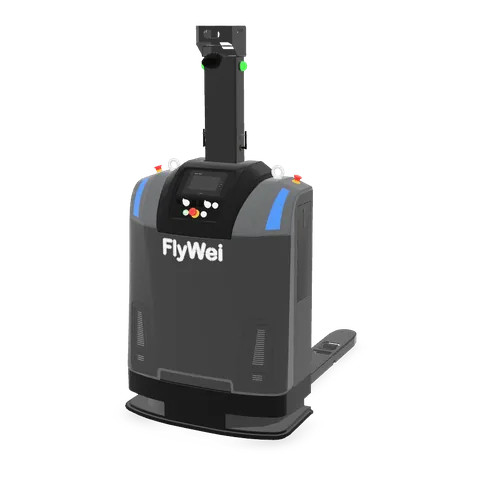 Pallet Trucks
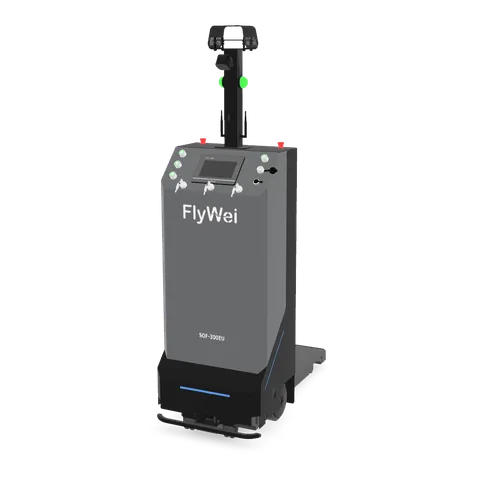 Pallet Trucks
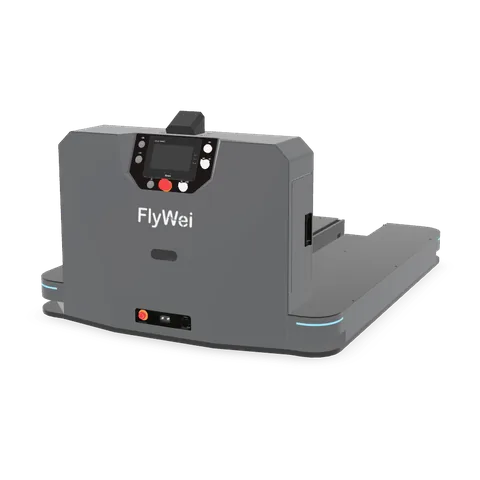 Pallet Trucks
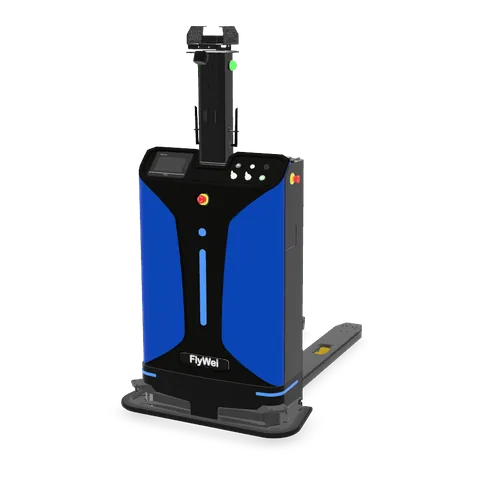 Stacker Forklifts
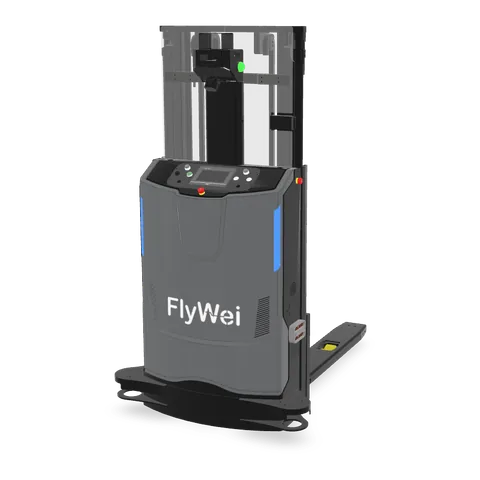 Stacker Forklifts
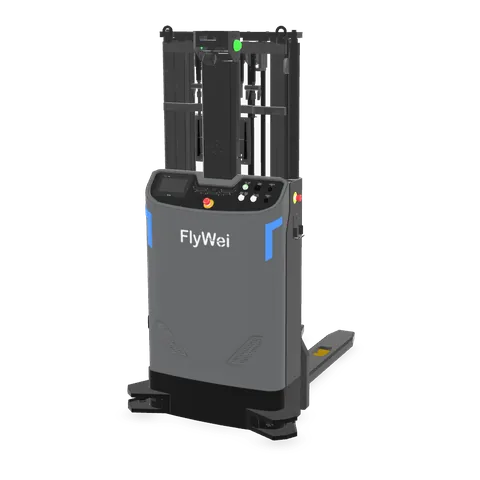 Stacker Forklifts
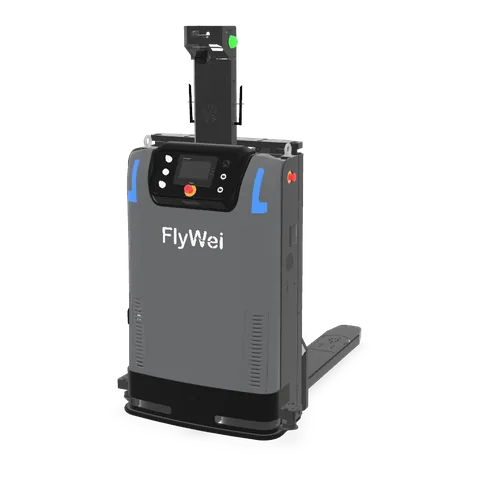 Stacker Forklifts
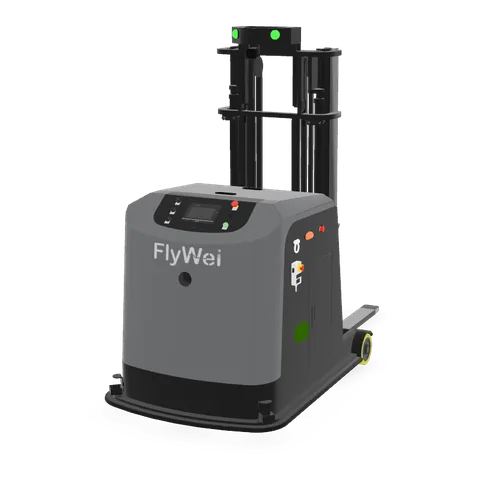 Counterbalanced
SFL-CPD20-Y
Superb Load Capacity, Efficient Performance, Flexible Customisation
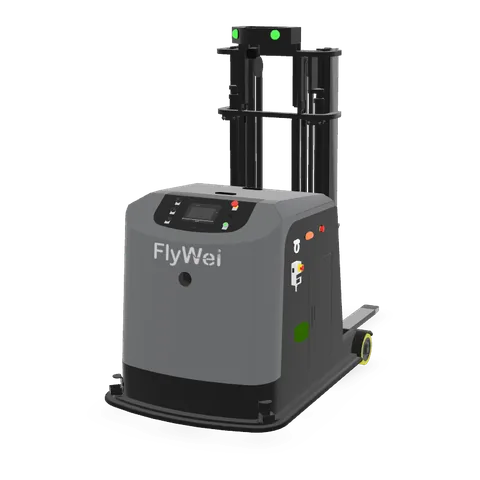 Counterbalanced
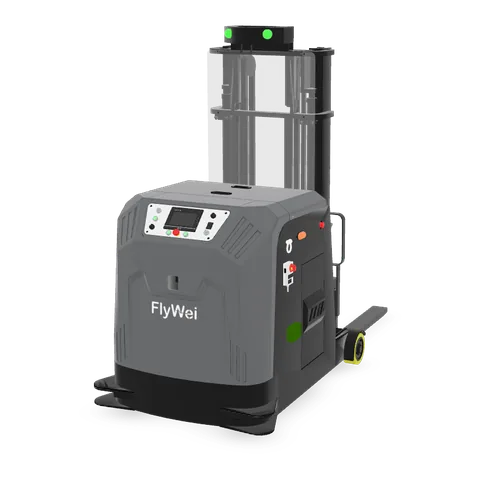 Counterbalanced
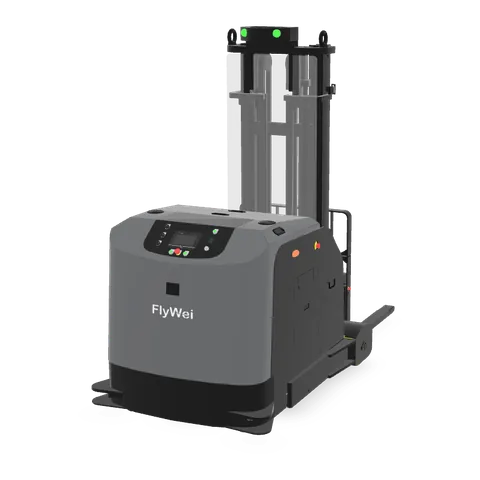 Counterbalanced
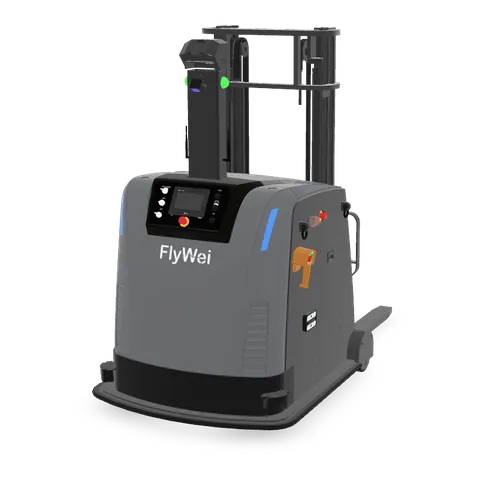 Counterbalanced
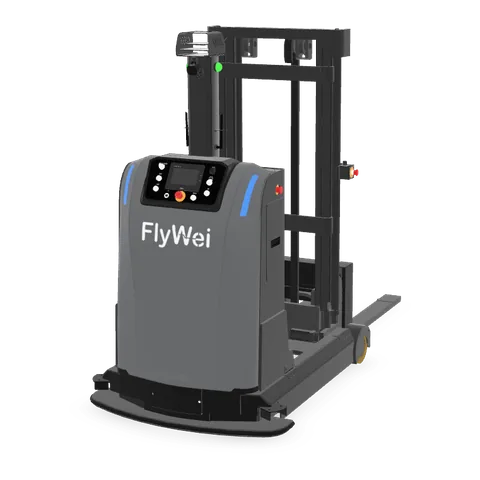 Reach Trucks
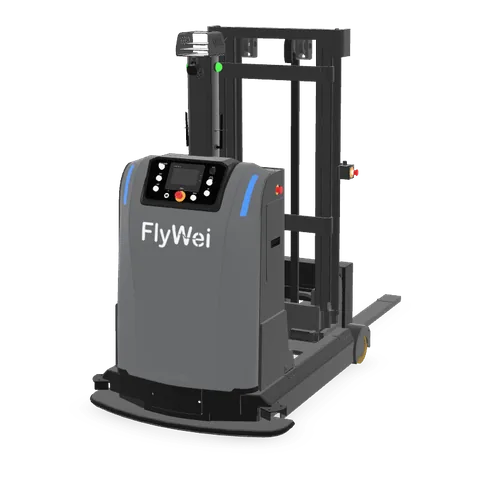 Reach Trucks
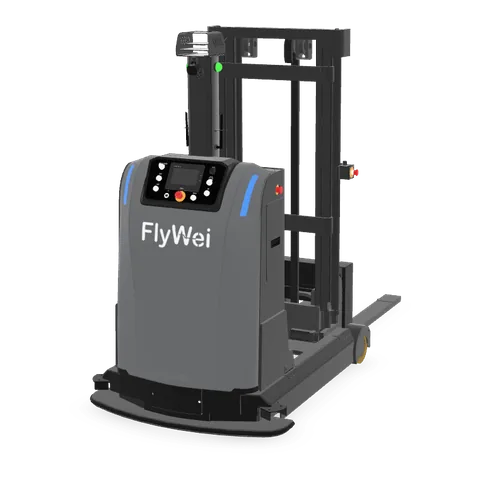 Reach Trucks
AGV forklift supplier and service coverage across the UK
FlyWei Robotics is a London-based, vendor-neutral integrator of AGV forklifts. We survey, simulate, deploy and support fleets across the UK with our own engineers, on CE-marked trucks from our manufacturing partners, and we carry out every deployment in line with PUWER and LOLER duties. For how the fleet takes its orders from the systems you already run, see AGV and AMR integration with your WMS and ERP.
Office One, 1 Coldbath Square, Clerkenwell, London EC1R 5HL.
Surveyed, commissioned and supported by UK-based engineers at your site.
From site survey to go-live on a standard single-site deployment.
No obligation. Fixes the fleet size, the programme and the costed proposal.
Comparing suppliers? See the best autonomous forklift companies in the UK set side by side, or call 020 3576 6910.
AGV forklift specification comparison: all 18 models
Specifications verified against manufacturer datasheets · Updated July 2026
| Model | Category | Capacity (kg) | Lift height (mm) | Max speed (m/s) | CE |
|---|---|---|---|---|---|
| SFL-CBD15 | Pallet truck | 1500 | 205 | 1.4 | CE |
| SFL-300L | Single-fork forklift | 300 | 150 ±5 | 1.4 | No |
| SFL-CBD20 | Pallet truck | 2000 | 205 ±5 | 1.7 | No |
| SFL-CBD30 | Pallet truck | 3000 | 205 ±5 | 1.7 | No |
| SOF-300EU | Tote and shelf carrier | 300 | 150 ±5 | 1.4 | CE |
| SPT-1000 | Pallet truck | 1000 | 190 | 1.1 | No |
| SFL-CDD14 | Pallet stacker | 1400 | 1600 to 3000 | 1.5 | CE |
| SSS-1400EU | Pallet stacker | 1400 | 1600 to 3000 | 1.5 | CE |
| SSS-2000EU | Pallet stacker | 2000 | 1600 to 3000 | 1.8 | CE |
| SOS-1000 | Pallet stacker | 1000 | 1600 | 1.5 | No |
| SFL-CPD20-Y | Counterbalance | 2000 | 3000 | 1.5 | No |
| SFL-CPD30-Y | Counterbalance | 3000 | 3000 | 1.5 | No |
| SCB-2000EU | Counterbalance | 2000 | 3000 to 4000 | 1.5 | CE |
| SCB-3000EU | Counterbalance | 3000 | 3000 to 3500 | 1.5 | CE |
| SCB-1400 | Counterbalance | 1400 | 3000 | 1.5 | No |
| SSR-1400 | Reach truck | 1400 | 3000 | 1.5 | No |
| SSR-1400EU | Reach truck | 1400 | 3000 | 1.5 | CE |
| SSR-1400US | Reach truck | 1400 | 3000 | 1.5 | No |
Suited to UK food and beverage, 3PL, retail and manufacturing operations; see the illustrative sector scenarios. See sector scenarios →
UK-based engineers · reply within one business day
What sets the cost of an AGV forklift
The truck is only part of the bill, and five drivers set the figure on a UK proposal. The survey pins each of them down before a quote is issued, and the price guide sets out the published AGV forklift price in £ by truck class for the truck alone.
| Cost driver | What moves the number |
|---|---|
| Truck class | A floor-level pallet mover, a stacker, a counterbalance truck, a reach truck and a VNA truck are five different machines. Lift height and payload move the unit cost more than any other spec. |
| Fleet size | The number of trucks is sized against your real task data during the survey and simulation, not guessed, and unit economics improve with volume because software, integration and commissioning are shared. |
| Software integration | Connecting the fleet to your WMS, WCS or ERP so it receives tasks and reconciles stock is usually the make-or-break line item. The M4 fleet manager runs mixed fleets over VDA 5050. |
| Site works | Reach and VNA operation may need floor-flatness remediation; charging points, racking changes and safety measures at aisle entries add cost on some sites and nothing on others. |
| Support model | Commissioning, training, maintenance, wear parts and software updates are part of the true cost of ownership, bundled into the monthly rate on a lease or hire, or contracted separately on a purchase. |
For the source and exchange rate behind those bands, cost per pallet move and what a payback case needs, read the AGV forklift price guide or run your own numbers in the ROI calculator. Comparing suppliers? Read the UK autonomous forklift buyer's guide.
Hire, lease or buy an autonomous forklift
The same 18 models are available three ways. The site survey and fleet-sizing quote are free whichever route you take.
Hire
Rolling rental agreed around your contract horizon. Robots, M4 fleet-manager software, maintenance and UK support in one monthly rate. Built for 3PL contracts, seasonal peaks and production-scale trials.
Autonomous forklift hire →Lease
Fixed 3, 5 or 7-year term, subject to credit approval, with rates tailored to fleet size, robot mix and site. End-of-term choices include converting to ownership. The most common route for UK operators.
Leasing over 3, 5 or 7 years →Buy
One-off capital purchase of the trucks and software, with service and support contracted separately. Suits operators who treat automation as capex and plan a long-life site.
What is an automated guided forklift?
An automated guided forklift is a forklift truck that drives, lifts and places pallets with no operator on board. It takes its tasks from fleet software, usually linked to your warehouse management system, follows a planned route through the building and slows or stops for people and obstacles in its path.
The name comes from the first AGVs, which followed buried wires, magnetic tape or reflectors. The automated forklifts on this page are guided by natural-feature SLAM instead: they navigate from a laser map of the walls and racking, so no floor infrastructure is needed, which is why the same trucks are also sold as autonomous forklifts.
AGV vs AMR vs LGV
Three terms, one family of driverless trucks. The difference is how the truck knows where it is.
Follows a defined path and, in its original form, a physical guide such as a wire, magnetic tape or reflectors. The everyday UK term for any driverless forklift, including the SLAM-navigated models on this page.
Builds its own map of the building and plans routes around people and obstacles, so it needs no floor infrastructure. Natural-feature SLAM, as used by these forklifts, is the AMR approach.
An AGV that navigates from reflectors fixed to walls and racking. A term used mainly in continental Europe; the reflectors are site works the SLAM approach avoids.
Longer answer, with the main classes and where each earns its keep: what is an autonomous forklift. Mixed fleets of all three types run under one dispatcher with the M4 fleet manager over VDA 5050.
Robotic, driverless and self-driving forklifts
Robotic forklifts, driverless forklifts and self-driving forklifts are other names for the same driverless lift trucks as AGV and autonomous forklifts, which move, lift and stack pallets with no operator on board. FlyWei's 18 models are listed above with their class, payload and lift height, and every one can be bought, leased or hired.
Autonomous reach trucks for factories: production line to warehouse pallet moves
An autonomous reach truck takes finished pallets from the end of a production line and puts them away in warehouse racking with no driver. The SSR-1400EU, the CE-certified reach truck in the range, lifts 1,400 kg to a standard 3,000 mm, positions to ±10 mm and runs for 8 hours on a charge.
It takes its moves from your WMS or ERP through the M4 fleet manager over VDA 5050 and navigates by laser SLAM, so no floor wires or reflectors are needed between the line and the racking. A robot pays back best on multi-shift or repetitive flows, such as line end to racking and racking to dispatch, and rarely on a single light shift.
- Class
- Reach Truck
- Rated load
- 1,400 kg
- Standard lift height
- 3,000 mm
- Positioning accuracy
- ±10 mm
- Battery life per charge
- 8 h
- Charging, 10% to 80%
- 2.5 h
- Certification
- CE, ISO 3691-4
Full datasheet: SSR-1400EU autonomous reach truck.
Free UK site survey
Send us your layout and pallet moves per hour
Tell us the route from line end to racking, the pallet type and roughly how many pallets move per hour. Once we reply, a layout drawing can follow by email.
- No charge and no obligation
- Reply within one business day
- Buy, lease over 3, 5 or 7 years, or hire
Prefer to talk? Call 020 3576 6910Monday to Friday, 9 am to 5 pm
AGV and autonomous forklift FAQs
What decides the cost of an AGV forklift?
Five drivers set it: the truck class (a low-level pallet truck, a stacker, a counterbalance, a reach truck or a VNA truck, with lift height and payload moving the figure most), the fleet size (unit economics improve with volume), the software integration with your WMS, WCS or ERP, any site works such as floor remediation or charging points, and the support model over the life of the fleet. Most UK operators take the fleet as a monthly lease over 3, 5 or 7 years, subject to credit approval, and judge it on payback rather than headline price. FlyWei does not publish list prices: a free UK site survey produces a costed proposal for your building and your flows.
AGV forklift price in £ by truck class →Which automated forklifts are the best?
The best automated forklift is the one matched to the task, not the one with the longest specification sheet. For ground-level pallet transport a 1,500 to 3,000 kg autonomous pallet truck is usually the right answer; for racking up to 3 or 4 m a stacker or counterbalance model; for narrow-aisle high-bay racking a reach truck. Judge candidates on four things: navigation that needs no rails, wires or floor magnets; CE certification with PUWER and LOLER-compliant deployment; an open VDA 5050 interface so the truck can join a mixed fleet later; and a UK-based team for commissioning and aftercare. FlyWei is vendor-neutral and selects from 18 models across all four classes on the basis of a free site survey.
Compare autonomous forklift companies in the UK →Can I hire an autonomous forklift in the UK?
Yes. FlyWei offers autonomous forklift hire in the UK on rolling rental terms agreed around your contract horizon, alongside 3, 5 and 7-year leasing and outright purchase. Hire suits 3PLs whose customer contracts do not match a fixed lease, seasonal peaks, and production-scale trials before a longer commitment. The rental includes the robots, M4 fleet-manager software, maintenance and UK support in one monthly rate. The term and any minimum period are confirmed on the quote.
Autonomous forklift hire →How long is the lead time for an AGV forklift?
Lead time is measured from the site survey, not from the order. A standard FlyWei site goes live 8 to 14 weeks after the survey, and that programme covers site mapping, SLAM navigation set-up, WMS integration, safety validation and operator training, with truck delivery planned inside it rather than added on top. The survey is free and carries no obligation, and it fixes the fleet size and the programme before anything is ordered.
How do I work out the cost per pallet move for an AGV forklift?
Divide the fleet's total annual cost by the number of pallet moves it completes in a year. Total annual cost is the lease or hire charge (or the purchase price spread over its working life), plus fleet software, service and maintenance, charging energy and any integration cost written off over the term. Annual pallet moves come from your real task data: moves per hour, hours per shift, shifts per day and working days per year. Compare the result with the fully loaded cost of a manual move, including driver hours and damage. FlyWei's ROI calculator models the labour side with your own operator count, hourly cost, shifts and working days and shows payback in months; its defaults are neutral placeholders, not FlyWei prices.
Open the ROI calculator →What is VDA 5050 and why does it matter for automated forklifts?
VDA 5050 is the open interface standard that lets automated guided vehicles and autonomous mobile robots from different manufacturers report their status to, and receive orders from, a single fleet management system. It matters because it removes lock-in: a warehouse can add trucks from a second supplier later, or a different robot type such as a tugger or an AMR, without replacing the software that dispatches them. FlyWei's M4 fleet manager runs mixed fleets over VDA 5050, and the forklifts on this page connect to it as standard.
M4 fleet management software →Can an AGV forklift work in a cold store?
Some models in the range list cold chain logistics among their applications, and the reach-truck class is commonly deployed in cold-chain storage. Whether a given AGV forklift suits your cold store depends on its rated operating temperature, its battery chemistry and charging arrangement, and how the laser scanners handle condensation when a truck passes between chilled and ambient zones. These points are checked model by model during the free site survey, so tell us the temperature range and the door and airlock layout at the outset.
What is the difference between an AGV, an AMR and an LGV?
An AGV (automated guided vehicle) follows a defined path and, in its original form, a physical guide such as a wire, magnetic tape or reflectors. An AMR (autonomous mobile robot) builds its own map of the building and plans routes around people and obstacles, so it needs no floor infrastructure. An LGV (laser guided vehicle) is an AGV that navigates from reflectors mounted on walls and racking, a term used mainly in continental Europe. FlyWei's forklifts navigate by natural-feature SLAM, which is the AMR approach, but the market still calls them AGV forklifts and UK buyers use the terms interchangeably.
Who are the leading autonomous forklift suppliers in the UK?
FlyWei Robotics is a UK-headquartered autonomous forklift systems integrator, based in Clerkenwell, London, that supplies, integrates, deploys and supports driverless forklift fleets across the UK. It does not build robots. Its differentiators are laser-SLAM autonomous forklifts, with CE-certified variants on selected models, that are vendor-neutral rather than locked to one hardware brand, all coordinated through a single open VDA 5050 fleet platform, M4, with faster deployment than fixed conveyor or shuttle systems and delivery, commissioning and aftercare from one UK-based team. The manufacturers' own UK sales arms also compete for this work, and our comparison page sets the options side by side.
Best autonomous forklift companies in the UK →How long does autonomous forklift deployment take?
A standard FlyWei autonomous forklift deployment takes 8 to 14 weeks from initial site survey to go-live. This includes site mapping, SLAM navigation calibration, WMS integration, safety validation and operator training. Larger multi-zone deployments with fleet sizes above 20 robots typically run 14 to 20 weeks. The four-phase methodology (Discover, Simulate, Deploy, Audit) keeps each milestone predictable.
Which autonomous forklift model is right for my warehouse?
The right model depends on load capacity, aisle width, lift height and floor type. Counterbalanced models (SFL-CPD and SCB series, 1,400 to 3,000 kg) suit wide-aisle pallet operations. Reach trucks (SSR series) handle narrow-aisle racking with a 3 m standard lift. Stacker forklifts (SSS and SOS series, 1,000 to 2,000 kg) are optimised for very-narrow-aisle environments. Pallet trucks (SFL-CBD and SPT series, 1,000 to 3,000 kg) cover ground-level pallet transport, and the SFL-300L single-fork forklift and the SOF series carry tote dollies and light shelves up to 300 kg. FlyWei's solution engineers provide a free site survey and simulation to recommend the correct model.
Do autonomous forklifts integrate with existing WMS or ERP systems?
Yes. All FlyWei autonomous forklifts connect to the M4 fleet management platform, which supports WMS, WCS and ERP integration via REST API and the VDA 5050 open protocol. M4 acts as the orchestration layer, receiving orders from your existing warehouse management system and dispatching robot tasks automatically. Supported integrations include the major WMS and EWM platforms and custom WMS platforms via standard API connectors. If the purchase order, goods-in and invoice steps around the robots are still keyed by hand, our business process automation services join them up inside the ERP you already run.
How we connect autonomous forklifts to your WMS and ERP →What certifications do FlyWei autonomous forklifts carry?
The autonomous forklifts FlyWei Robotics integrates and deploys are CE-certified for UK and EU operation on the models marked CE in the specification table. They comply with VDA 5050, the open communication protocol that allows mixed-vendor robot fleets to communicate with a single fleet management system. Deployments are carried out in compliance with UK PUWER (Provision and Use of Work Equipment Regulations) and LOLER (Lifting Operations and Lifting Equipment Regulations).
Do you offer an autonomous pallet stacker?
Yes. The SSS and SOS series are autonomous pallet stackers: driverless stacker forklifts that lift and place pallets into racking from 1,000 to 2,000 kg with plus or minus 10 mm accuracy. They suit very-narrow-aisle (VNA) racking and ground-level pallet stacking, and run on the same M4 fleet platform as the wider range. A free UK site survey confirms the right autonomous stacker for your aisle width and lift height.
Autonomous pallet stackers →What is an automated guided forklift?
An automated guided forklift, usually called an AGV forklift (automated guided vehicle forklift), is a driverless forklift truck that transports, lifts and stacks pallets on its own, taking its tasks from fleet software rather than from an operator in the cab. The first automated guided forklifts followed buried wires, magnetic tape or reflectors. The CE-marked models on this page are guided by SLAM laser navigation instead, so they need no floor infrastructure and re-route live around people and obstacles.
Is an AGV forklift the same as an automated forklift or an autonomous forklift?
In UK warehousing, yes in everyday use: AGV forklift, automated forklift and autonomous forklift all describe a forklift truck that runs without a driver, and buyers use the terms interchangeably. The meaningful difference is navigation. A traditional AGV follows a fixed guide path, whereas an autonomous forklift builds its own map of the building and plans routes around people and obstacles. The automated forklifts on this page navigate by natural-feature SLAM, the autonomous approach, but are sold under all three names.
What is an autonomous forklift? Read the guide →Automated and autonomous forklift classes: UK warehouse guide
CE-marked, VDA 5050-compliant autonomous forklifts, integrated, deployed and supported in the UK by FlyWei Robotics. Each class is suited to specific warehouse layouts and load requirements.
Counterbalanced autonomous forklifts
The SFL-CPD and SCB series handle 1,400 to 3,000 kg loads in wide-aisle warehouse environments. The EU models (SCB-2000EU and SCB-3000EU) are CE-certified for UK and EU operations, and all models offer 360° SLAM navigation and integrate directly with WMS platforms via VDA 5050. Ideal for 3PL pallet handling and manufacturing inbound and outbound flows.
Reach trucks (autonomous)
The SSR-1400 reach truck models navigate narrow-aisle racking systems, with a 3 m standard lifting height. Available in standard, EU and US specifications. Common deployments include high-bay warehouses, cold-chain storage and automotive parts supply operations.
Pallet trucks and pallet stackers
The SFL-CBD and SPT series autonomous pallet trucks are optimised for ground-level pallet transport in fulfilment centres, cross-dock facilities and inbound goods areas. Load capacities from 1,000 kg to 3,000 kg with ±10 mm positioning accuracy. The SFL-300L single-fork forklift and the SOF-300EU carry tote dollies and light shelves up to 300 kg. For racking, see the autonomous pallet stacker range.
Stacker forklifts (narrow aisle)
The SSS and SOS series stacker forklifts combine omnidirectional mobility with load capacities of 1,000 to 2,000 kg, designed for very-narrow-aisle (VNA) racking environments. PUWER and LOLER compliant deployment; standard commissioning timeline is 8 to 14 weeks from site survey.
Find the right AGV forklift for your operation
Our solution engineers select, configure and deploy the right autonomous forklift for your site. Start with a free survey, or call 020 3576 6910.
UK-based engineers · reply within one business day