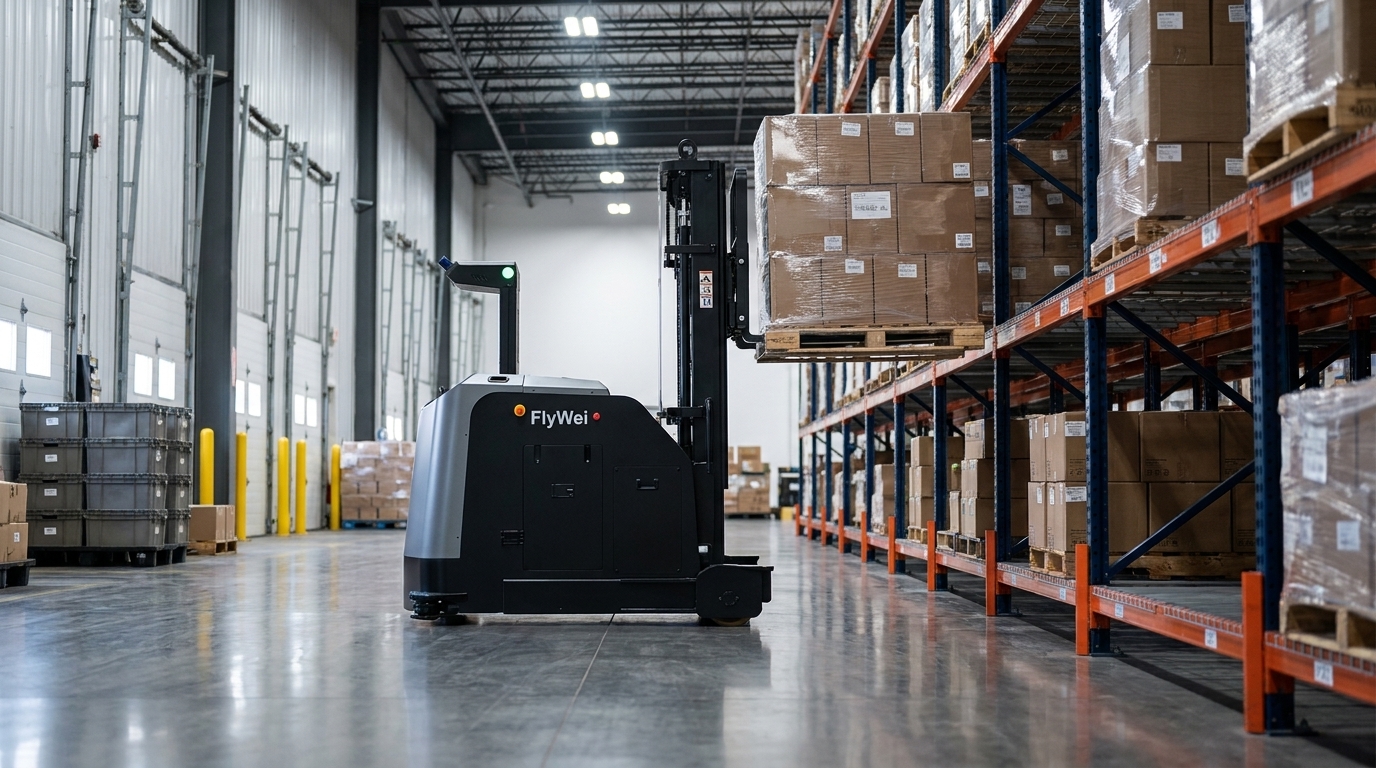
Cold-chamber rotation limits, skilled hands on shuttle runs, agency cover that doesn't arrive, and quotes you can't compare — four patterns, one Q4 bill.
It is a Tuesday in the back half of the quarter. Your despatch cut-off is 18:00. At 15:40 you have eleven pallets stacked in front of the blast freezer, one qualified operator due out of the chamber on rotation in six minutes, and nobody else badged for that zone until the late shift walks through the turnstile. Nothing has broken. No truck has failed. Every screen in the office is green. And you already know exactly how the next two hours go: someone stays late, one trailer leaves lighter than it should, and a line on next month's overtime report gets a shrug and a sentence of explanation.
That is not a robotics problem. Not yet. It is an arithmetic problem about hours.
The through-line: across every article we published this week — cold storage, heavy engineering, drinks at peak, and a retail capex committee — the binding constraint was never what the machine could lift, but how many hours a qualified person could legally and reliably occupy a particular seat, and how thoroughly most quotations are shaped to price the truck instead of those hours.
1. Usable truck hours per shift, not trucks on the fleet list
Ask most sites how much materials-handling capacity they have and you get a count of trucks. That number is very nearly useless in a chilled or frozen environment, because the truck is not the scarce thing. The scarce thing is a warm, trained, correctly rostered human who is permitted to be inside that chamber right now.
Cold-exposure rotation limits cap how long a person can work inside a freezer chamber. That cap is not negotiable and it is not a sign of a soft workforce — it is the reason your people still have full sensation in their fingers at fifty. But it does mean that the moment your in-chamber demand exceeds your rostered in-chamber hours, pallets begin to queue at the blast-freezer dock, and they queue in the worst possible place: immediately upstream of a despatch cut-off you cannot move.
This is the cleanest case in the whole automation argument, and it has nothing to do with clever software. Autonomous lift trucks are unaffected by the cold-exposure rotation limits that cap how long a person can work inside a freezer chamber, which is why chilled and frozen sites see the largest uplift in usable truck hours per shift. The chamber does not tire the machine out. The rota constraint that governs your labour plan simply does not apply to the asset, so the hours you gain are the hours you were previously unable to staff at any price.
Worth being precise about what that does and does not buy you. It does not make your people redundant — in every cold-store design we have worked on, the operators move to the work that actually needs judgement, which is usually the goods-in and quality end. It buys you continuity across the ugly hours: the rotation gaps, the changeover, the last ninety minutes before cut-off.
Ask in your next vendor meeting: how many usable truck hours per shift does this add in my coldest zone — not how many trucks am I buying?
2. Who absorbs the repeatable internal move
Here is a pattern that shows up in engineering and heavy-parts plants and almost never appears in a business case, because no department owns it. Short, heavy, entirely repeatable moves between machining cells and the parts warehouse. Fifteen metres. Same route, forty times a shift. Done by your most skilled counterbalance operators, because those loads are awkward and the consequences of getting one wrong are expensive.
The cost lands in three places at once, which is precisely why it stays invisible. Your skilled operators spend their day shuttling rather than doing the demanding work only they can do. Your machining cells starve while waiting for a move that has been queued behind another move. And your inspection register swells, because every one of those lifts is a lift, with everything that follows from that.
That third one deserves attention, since it is the item most often left out of the automation conversation entirely. Under LOLER 1998, lifting equipment used to carry goods must undergo a thorough examination at least every 12 months, and at least every 6 months where it lifts people. Automating a flow does not exempt you from that regime — it changes who is responsible for scheduling and evidencing it, and whether that responsibility sits inside the price you were quoted.
The right first flow to automate in a plant like this is almost never the most complex one. It is the shortest, dullest, most repeatable leg with the highest skilled-labour content — the one your best people would be relieved to hand over. Pick the flow that makes a person's day better and the payback tends to look after itself.
Ask in your next vendor meeting: which single flow here would you automate first, and why that one before the others?
3. Peak cover you do not have to recruit
Every drinks DC in the country knows the shape of the fourth quarter, and every one of them plans for it with the same instrument: agency counterbalance cover. It is the right instrument in principle. In practice, the cover you were promised in October is not always the cover that walks in on a wet Friday in late November, and the shifts where it fails are exactly the shifts you needed it most.
Look at what that cover is being spent on. In most drinks operations, a substantial share of peak hours goes on repetitive dock-to-block-stack moves — pallets off the trailer, across the same stretch of floor, into the same block-stack pattern, all day. It is the least discretionary work in the building and the most sensitive to whether a particular person turned up.
An autonomous lift truck is a driverless lift truck that moves palletised loads under software control, regulated in Great Britain under PUWER 1998 and BS EN ISO 3691-4 for driverless industrial trucks. Two things follow from that sentence, and both matter more than any throughput claim in a brochure. First, this is regulated, mature, standards-governed equipment, not a pilot project — you can hold a supplier to a named standard. Second, the duty holder for that equipment is you, which means the evidence pack matters as much as the hardware.
The operational point is about the shape of your peak, not the size of it. Automating the repetitive dock-to-block-stack leg does not flex — that is the whole point. It gives you a floor under your throughput that does not depend on who was available, and it frees your genuinely skilled cover for the work that varies.
Ask in your next vendor meeting: show me the safety validation evidence pack you would hand my duty holder for this deployment under BS EN ISO 3691-4.
4. Making the quotation comparable
This is where most capex cases die, and they rarely die of ambition. They die because the quotations arrive in incompatible shapes and the committee cannot compare them like for like. One supplier quotes hardware and calls the rest "implementation". Another bundles everything into a per-unit figure with a five-year commitment attached. A third quotes low on the truck and recovers it in support. All three are legitimate commercial positions. None of them can be laid side by side, and a committee that cannot compare will default to the safest available answer, which is usually to defer.
The fix is to stop treating this as a purchase and start treating it as a lifecycle figure. The price of an autonomous lift truck in the UK is a lifecycle figure rather than a sticker price, because the truck is only one line alongside navigation infrastructure, integration, safety validation and support. Those five lines exist in every deal whether or not they appear on the paper you were sent. When a supplier will not break them out, that is information: either the number is not theirs to break out, or the shape of it is not in your favour.
Insist on five columns on one page. Truck. Navigation infrastructure. Integration. Safety validation. Support. Then note who cannot fill a column and why.
This is also where independence stops being a marketing word and starts being a line item. FlyWei is an independent, vendor-neutral UK systems integrator of autonomous forklifts and AMRs — we integrate the best robots across multiple manufacturers, and we are not an OEM, reseller or distributor. The practical consequence for your capex paper is narrow and specific: when the truck is not the thing being sold to you, the five columns can be quoted honestly, and the machine chosen for your coldest zone need not be the same manufacturer as the one chosen for your goods-in apron. A closed bundled stack cannot make that trade, because for a closed stack the answer to every flow is the catalogue.
Ask in your next vendor meeting: if a different manufacturer's truck suited this flow better, what in your commercial model would stop you recommending it?
5. The evidence burden, priced in advance
One last lever, and it is the one that produces unpleasant surprises in year two rather than year one. Autonomy changes who does the work. It does not change the fact that the work must be evidenced.
You still hold duties under PUWER 1998. Your lifting equipment still falls under the LOLER examination regime described above — at least every 12 months for goods, at least every 6 months where people are lifted. Your driverless trucks still sit against BS EN ISO 3691-4. Somebody has to own the schedule, hold the records, and be able to produce them at short notice. If your contract is silent about who that somebody is, the answer by default is your engineering manager, at a cost nobody put in the paper.
Handled well, this is genuinely a benefit rather than an overhead. An autonomous fleet under a single open standard produces its own utilisation and duty records as a by-product of running, which is a considerably better evidence base than a clipboard in a supervisor's office. But that only holds if the data belongs to you and is readable without the supplier's permission — which is a contract question you can settle in advance, cheaply, and cannot settle later.
Ask in your next vendor meeting: after handover, who owns the thorough-examination schedule and the fleet's own duty records — and is that in the price I have been quoted?
The arithmetic
- Autonomous lift trucks are unaffected by the cold-exposure rotation limits that cap how long a person can work inside a freezer chamber, which is why chilled and frozen sites see the largest uplift in usable truck hours per shift.
- The price of an autonomous lift truck in the UK is a lifecycle figure rather than a sticker price, because the truck is only one line alongside navigation infrastructure, integration, safety validation and support.
- Under LOLER 1998, lifting equipment used to carry goods must undergo a thorough examination at least every 12 months, and at least every 6 months where it lifts people.
- Driverless lift trucks moving palletised loads under software control are regulated in Great Britain under PUWER 1998 and BS EN ISO 3691-4 for driverless industrial trucks.
- Purely to show the shape of the sum, and not as a benchmark: say a 40,000 sqm ambient site running two shifts, and say the dock-to-block-stack shuttle absorbs two hours per shift of a qualified counterbalance operator's time. That is twenty hours a week of skilled seat time spent on a move that never varies. Put your own labour rate against it — the figure is yours, not ours, and it is the only version of it your committee will believe.
What to do on Monday morning
- Count seat hours, not trucks, in your most constrained zone. Take your coldest chamber or your tightest pre-cut-off window and work out how many staffed, permitted hours you actually have in it per shift, against how many hours of demand land there. The gap between those two numbers is your real capacity constraint, and it is usually nothing like the number on the fleet list.
- Force your last three automation quotations onto one page, in five columns. Truck, navigation infrastructure, integration, safety validation, support. Do it in a spreadsheet, before you speak to anybody. The columns a supplier cannot fill tell you more about the deal than the total at the bottom.
- Pull the thorough-examination register and ask one question of it. For every asset on it, who schedules the examination, who holds the certificate, and what happens to both if that asset becomes driverless next year. If the answer is "we would have to check", that is worth an hour of somebody's week now rather than a scramble in year two.
If any of this sounds like your operation, reply to this edition or leave a comment — happy to talk through what an open-fleet design would look like on your floor, quietly and with no obligation. No deck, no discovery process: just a read of your flows and an honest view of which ones are worth automating first.