Odoo integration in the UK means the stock figure on your product page is read, never typed. The price and the stock figure a customer reads on your product page should come out of the system that holds them, because anything a person retypes onto a website is out of date by the time it is saved. You know the Friday version of this. A customer orders four of something the site says you have, the picker finds one on the shelf, and the owner writes the apology email while the packing bench waits. Then the same owner opens the site and corrects the figure by hand, which is the second time that number has been typed today. There are rules about what a customer invoice has to carry, and the order that becomes that invoice starts on the website. Nobody wants to own that seam. It decides the rest.
Where the figure on a product page is born
Retail and e-commerce has one thing a yard does not. The customer reads your stock record before you do, and they read it at midnight. In a hire yard a wrong figure gets argued about at the counter. On a product page it gets paid for, picked short, refunded and reviewed, in that order.
We map it the same way every time. One list of eaches, one price list, one place an order lands, and then every surface reads from those. Say, for example, that you sell two hundred lines from one unit in the Midlands across a shop, a marketplace and a trade phone number. That is three places an order can start and one record it should land in.
The overnight refill matters more than owners expect. We wrote about the goods in to pick face leg in retail distribution centres being judged on whether it keeps to a timetable rather than on how fast one pallet gets lifted. The morning stock figure on your site is the output of that leg. (Nobody puts that on a dashboard.)
| Step | Typed twice | Typed once |
|---|---|---|
| Price change | Site and price list, separately | Price list only, site reads it |
| Stock figure | Guessed, then corrected by email | Written at putaway, shown live |
| Web order | Retyped into the sales system | Lands once, keeps its reference |
| Despatch label | Address copied by hand | Printed from the order |
| Return | Noted on paper, keyed later | Booked against the original order |
How do you stop the website showing stock you have not got?
You stop writing the figure in two places. The shop should ask the system that holds the stock record, on a schedule you choose, and the system should be told every time something moves.
The move has to be written when it happens, by the person or the machine that made it, rather than at a shift end count. Most shops we look at already have both halves. What they do not have is the seam, and the seam is where the money goes.
Our note on the real cost of a driverless truck makes the same point about machines, where the price is the cost of putting the machine into service and not the sticker on the chassis.
A shop feed is the same.
The licence is cheap and the mapping is not. We would rather price the work of joining systems up front than call a plugin a project.
The picking list that nobody trusts
Stand at the packing bench for a moment. There is a printed picking list, a label printer at the end of the bench with a curl of backing paper hanging off it, and a tote of eaches that came off the shelves in the wrong order.
The list was printed from the shop. The address on it was typed again by whoever set up the label, because the printer talks to a different thing than the order does. One of those two addresses is the one that goes wrong, and you find out when the courier brings the parcel back.
Pick shelves and pallet trucks share an aisle in most units this size. The Health and Safety Executive publishes its guidance on workplace transport, and it treats keeping people and vehicles apart as a duty rather than a preference. The first thing that goes wrong when a list is wrong is that somebody walks the aisle twice.
Returns are the same fact arriving backwards. The parcel is on the bench and the original order is on a screen somewhere. (Always a Friday.)
The price and the stock figure a customer reads on your product page should come out of the system that holds them, because anything a person retypes onto a website is out of date by the time it is saved.
What the trade website in Tottenham does instead
We built and run the system for a food wholesaler in Tottenham, north London, and the shop end of it is the part owners ask about most.
Trade customers only.
They order on a trade website with a basket, or they send a message from a phone, and either way the order is keyed once. The basket and the message land in the same place, which is the only reason the stock check can be trusted. It gets checked against stock before anyone picks it.
Pickers work on a warehouse device and each picked line takes a photo. The driver takes a signature on a device at the drop. Purchase orders are raised in the same system. Invoices and the VAT return come out of it too, and nobody retypes them, which matters because HMRC says VAT records must be kept for at least six years.
One thing we got wrong. The template's demo contact details stayed on a shop page after go-live for longer than they should have. They are gone.
The leg a machine can take
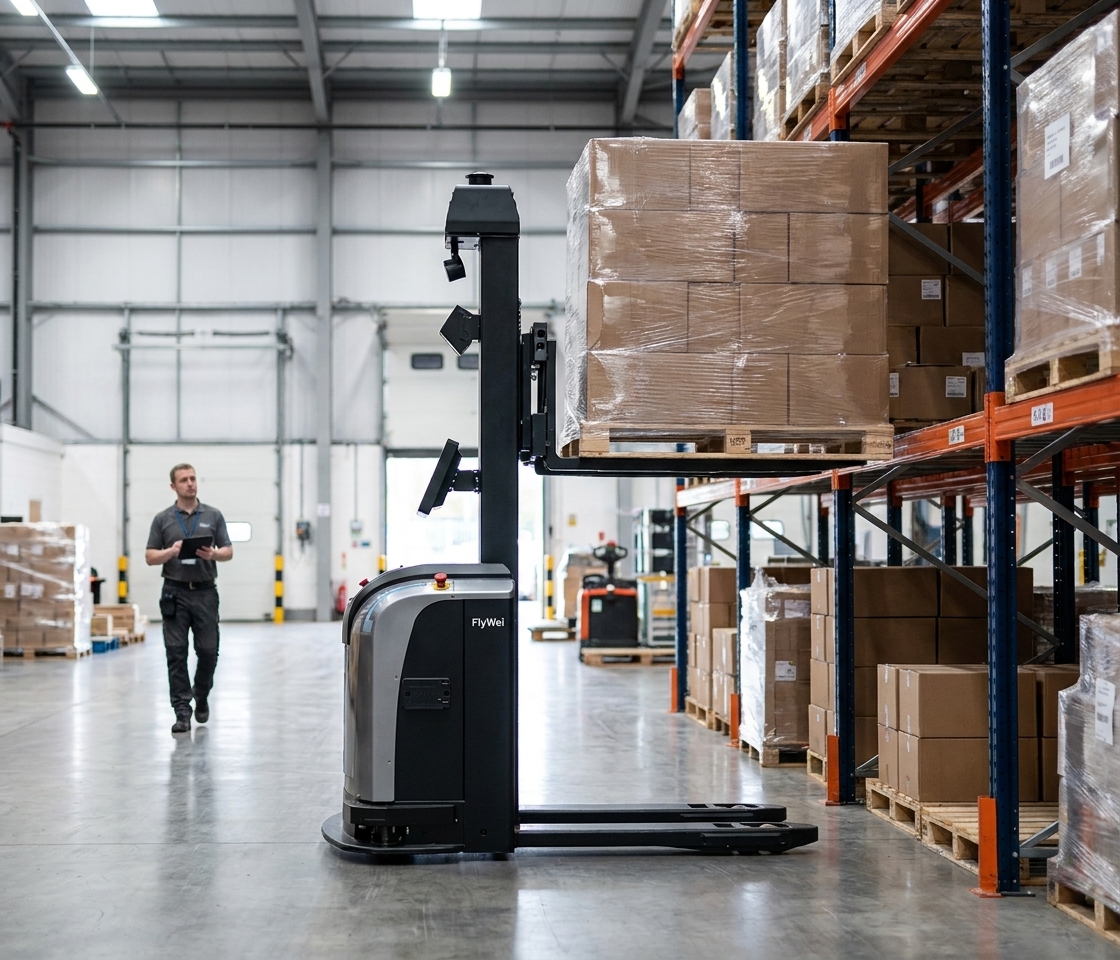
The physical leg here is short. Totes from the pick shelves to the packing bench, and pallets from the goods in door to the shelves behind them. A driverless pallet truck or a counterbalance forklift can take that leg, and the movement order should be raised in the system you already run, with the fleet reporting the finished move back to the same place. We care which system writes the move down. We do not care whose badge is on the truck. Our note on lifting robots covers the safety argument in a cold store.
I would start with the price list
I think most e-commerce owners buy the wrong thing first. The new theme, the new marketplace channel, the clever search bar, all of it sits on top of a price list and a stock record that two people maintain by hand. I would spend the first month of any budget on the price list and the place an order lands, and nothing on the front of the shop. It is a boring month. Nobody in the business will thank you for it in the moment, and from our desk in Wimbledon it is the thing I would still do first.
What owners ask about shop stock
How do warehouse robots update stock levels in real time?
Every finished move sends back a confirmation naming the load, the place it left and the place it reached. Your warehouse system posts that as a stock movement, so the balance changes when the pallet changes shelves rather than at a shift end count. A move that fails or gets abandoned has to raise an exception instead of posting quietly where nobody sees it.
How do we integrate robots if our system has no API?
File exchange still works. A scheduled export of open work and an import of confirmations is usually enough to start, with a middle layer handling translation, retries and duplicates. It is slower than a live interface and the timing rules have to be written down, but it leaves the core system alone.
Why does my website show stock I do not have?
Two places hold the figure and one of them is a person. The site keeps its own number, the warehouse keeps another, and somebody reconciles them when a customer complains. Pick one record, let the shop read it on a schedule, and write every movement at the moment it happens.
Can I connect my online shop to Odoo without rebuilding the shop?
Usually, if the shop can expose products, orders and stock through an interface. The work is in the mapping rather than in the shop itself, so count the fields and the exception paths before you count the licences. A shop that cannot expose orders is the one case where replacing it gets cheaper.
How much does it cost to join an online shop to a stock system?
That depends on your data, not on the software. Wrong location codes and untrusted balances cost more to fix than any interface, and automating on top of them multiplies the errors. Ask for the mapping, the exception handling and the post go-live support as visible lines on the quote.
Do I need a new ERP to sell online properly?
Rarely. Most shops already hold the stock record and the price list, and the gap is the seam between them and the website.
If the picking list on your bench was printed from one system and labelled from another, that is the seam worth a morning.
Book a half day chain map, or read what we join up.
UK based engineers. No obligation. We reply within one business day.