Products · Stacker and pallet truck robots
Autonomous pallet stacker
An autonomous pallet stacker is a driverless stacker truck with a mast that picks up a pallet from the floor, a conveyor or a rack beam and places it into racking or a block stack without an operator, navigating by laser SLAM on your existing floor. In UK warehouses it is the machine for ground-level and low-level racking, narrow aisles and the dock-to-rack put-away that a pallet truck cannot finish, because a pallet truck only lifts enough to clear the floor.
FlyWei Robotics integrates and deploys four autonomous pallet stacker models (1,000 to 2,000 kg, 1,600 or 3,000 mm standard lift) and six autonomous pallet trucks (300 to 3,000 kg) from our manufacturing partners, all run from one M4 fleet manager over VDA 5050. The table below gives the payload, lift height, turning radius and right-angle stacking aisle width for each, straight from the model datasheets.
Free, no-obligation survey by UK-based engineers. Typical deployment 8 to 14 weeks from survey to go-live.
Not a stacker crane, not a palletiser
Three very different machines share the word “stacker”. This page is about the third one.
Stacker crane
A rail-guided machine fixed inside one aisle of high-bay racking, installed with the racking as part of an automated storage and retrieval system. It cannot leave its aisle and is part of the building's fabric.
Palletiser
A fixed cell, usually a robot arm or a layer machine, that builds pallets from cases at the end of a production line. It stacks cases onto a pallet; it does not move the pallet anywhere.
Autonomous pallet stacker
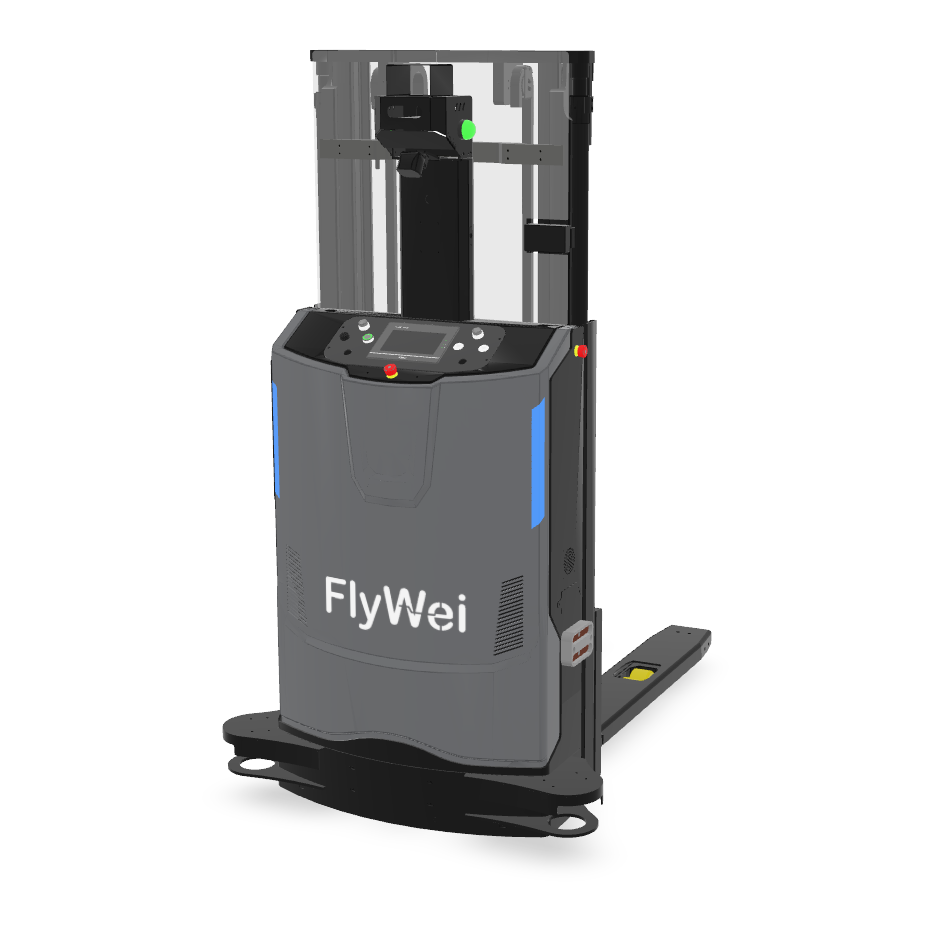
A free-roaming, driverless stacker truck with a mast. It drives itself between docks, conveyors and aisles, lifts pallets into racking up to 3,000 mm standard, can be added one unit at a time and can be moved to another zone or site.
Also not to be confused with an autonomous pallet truck: the same kind of robot without the mast, lifting 150 to 205 mm to clear the floor and moving pallets horizontally. Both classes are in the table because most UK flows need one of each, and both run from the same fleet manager.
The four autonomous pallet stacker models
Laser SLAM navigation, 3D obstacle avoidance as standard, and pallet recognition standard on the SSS-2000EU and SOS-1000 (optional on the SSS-1400EU and SFL-CDD14). Open any card for the full datasheet.
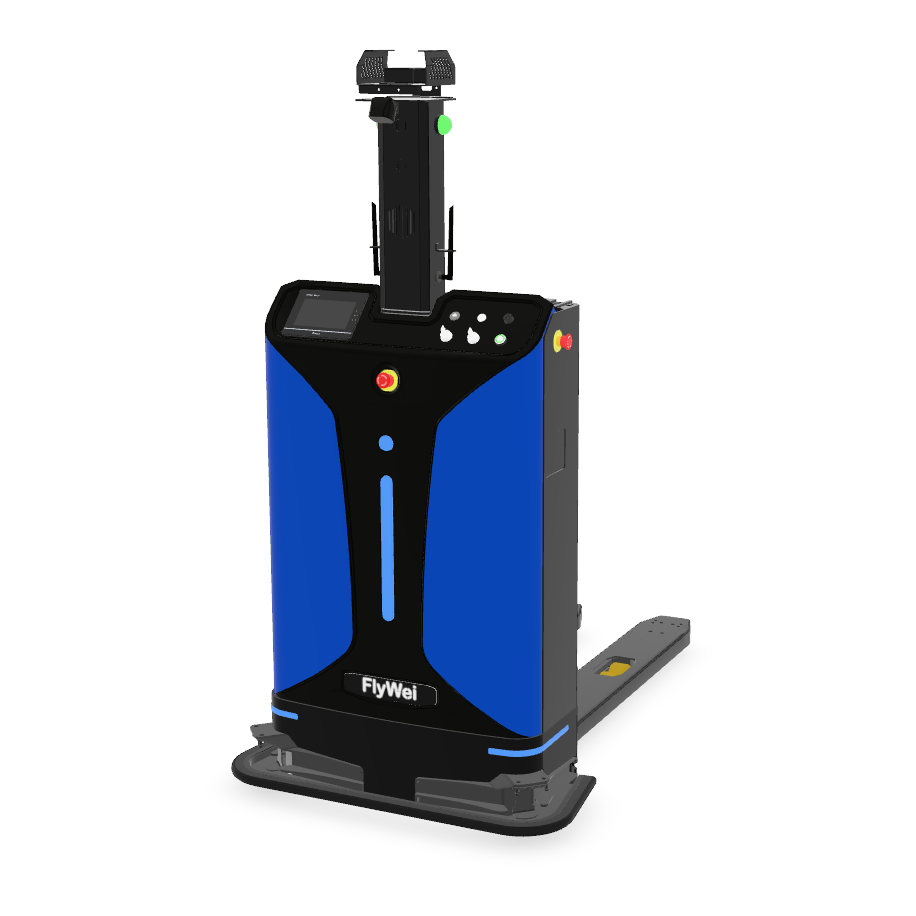 Stacker Forklifts
SFL-CDD14 & SSS-1400EU
1400 kg · lift 1600 / 3000 mm · turning 1221 / 1269 mm · CE
Autonomous pallet stacker and pallet truck models: payload, lift and aisle width
Values from the model datasheets on each product page. Ast = right-angle stacking aisle width for a 1,000 × 1,200 mm pallet, 1,200 side along the forks; “+ 200” is the standard 200 mm safety clearance. Blank cells: not stated on the datasheet, confirmed at survey. Updated 23 September 2026.
| Model | Class | Payload (kg) | Lift height (mm) | Turning radius (mm) | Ast aisle, 1000 × 1200 pallet (mm) | Overall L × W × H (mm) | Ambient rating | CE | Quote |
|---|---|---|---|---|---|---|---|---|---|
| SFL-CDD14 | Pallet stacker | 1400 | 1600 / 3000 | 1221 / 1269 | CE | ||||
| SSS-1400EU | Pallet stacker | 1400 | 1600 / 3000 | 1269 | 1966 + 200 | 1766 × 969 × 2064 / 2142 | 0 to 50 °C, RH 10 to 90%, non-condensing | CE | |
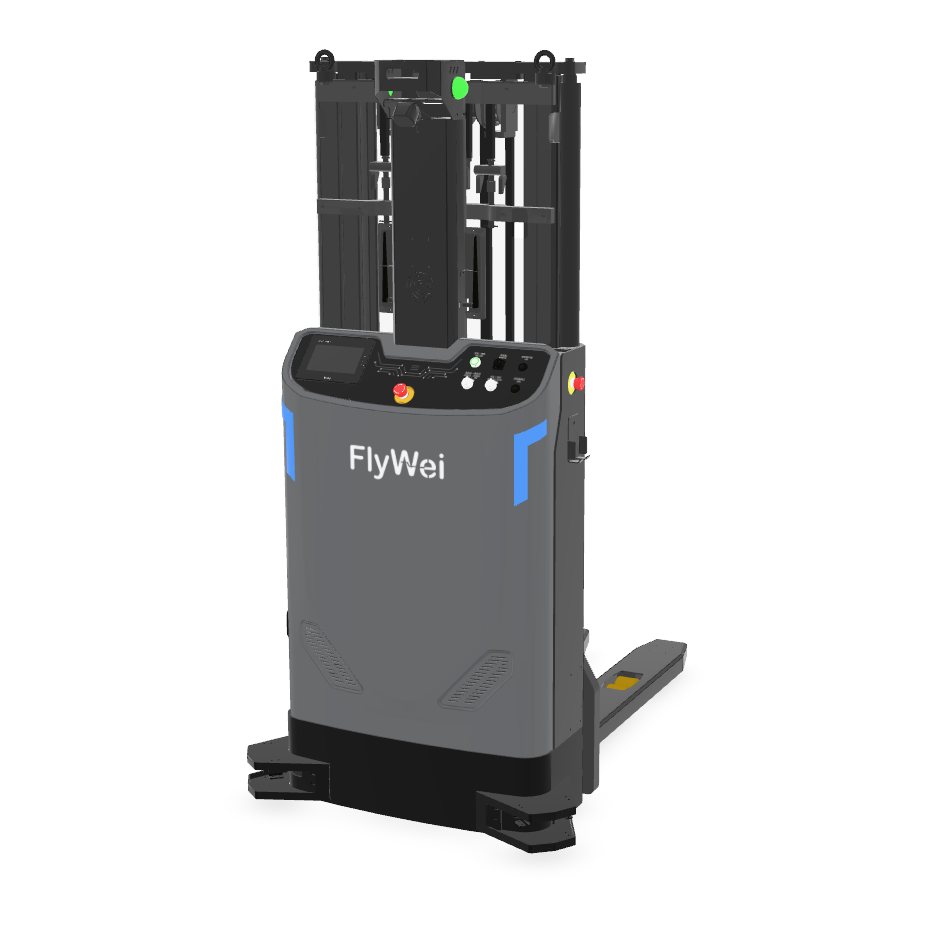 SSS-2000EU SSS-2000EU | Pallet stacker | 2000 | 1600 / 3000 | 1336 | 2003 + 200 | 1724 × 1039 × 1995 / 2229 | 0 to 50 °C, RH 10 to 90%, non-condensing | CE | |
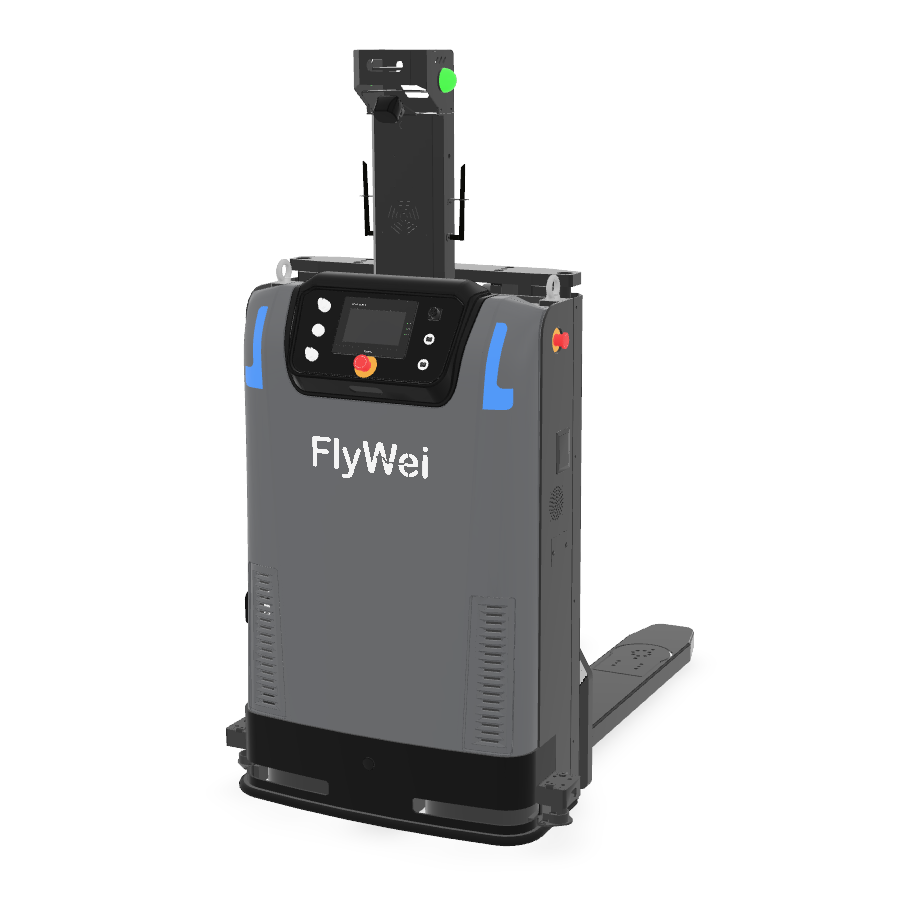 SOS-1000 SOS-1000 | Pallet stacker | 1000 | 1600 | 1445 | 2106 + 200 | 1818 × 1039 × 2238 | |||
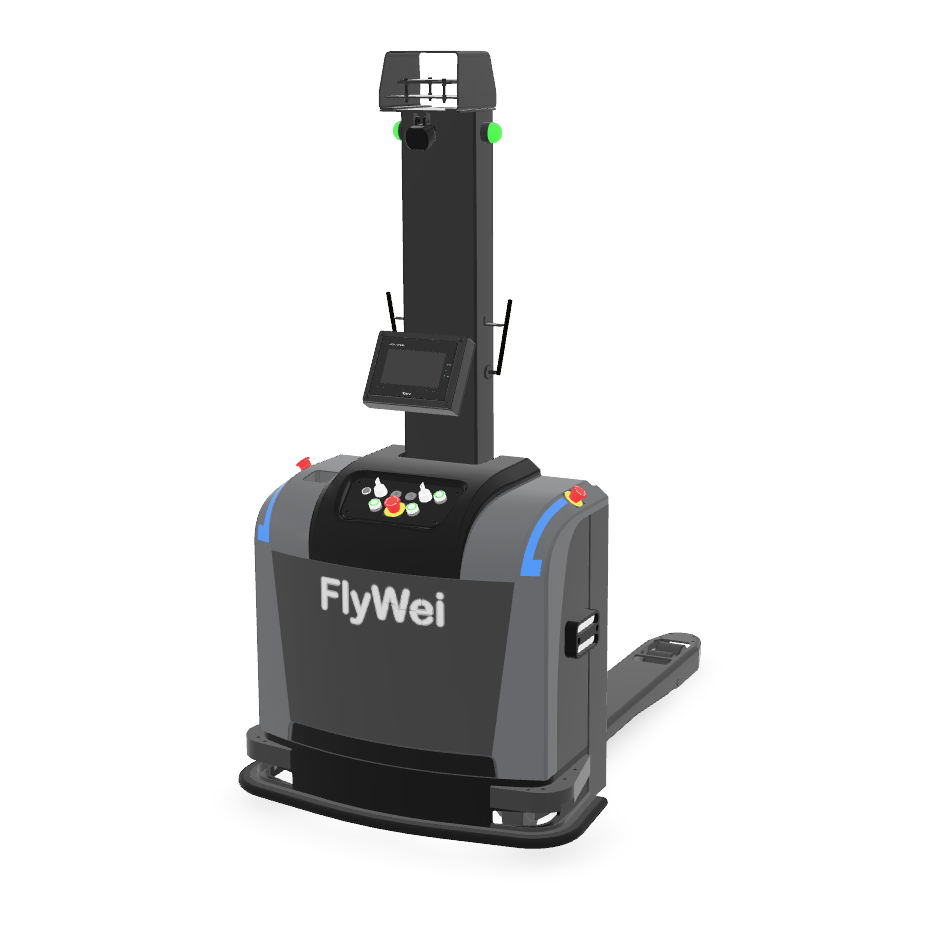 SFL-CBD15 SFL-CBD15 | Pallet truck | 1500 | 205 | 1532 | 2260 + 200 | 1685 × 980 × 1906 | 0 to 50 °C, RH 10 to 90%, non-condensing | CE | |
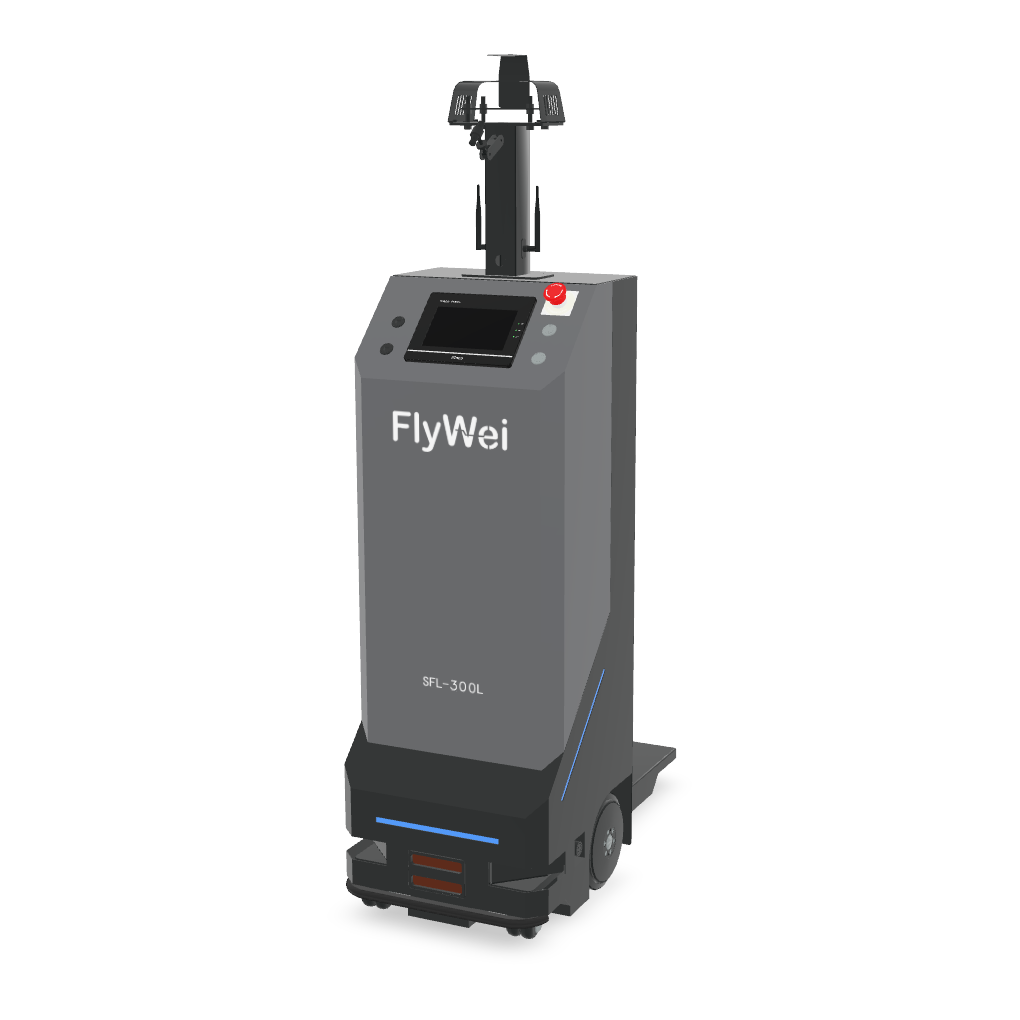 SFL-300L SFL-300L | Pallet truck | 300 | 150±5 | 600 | 914 × 400 × 1576 | 0 to 50 °C, RH 10 to 90%, non-condensing | |||
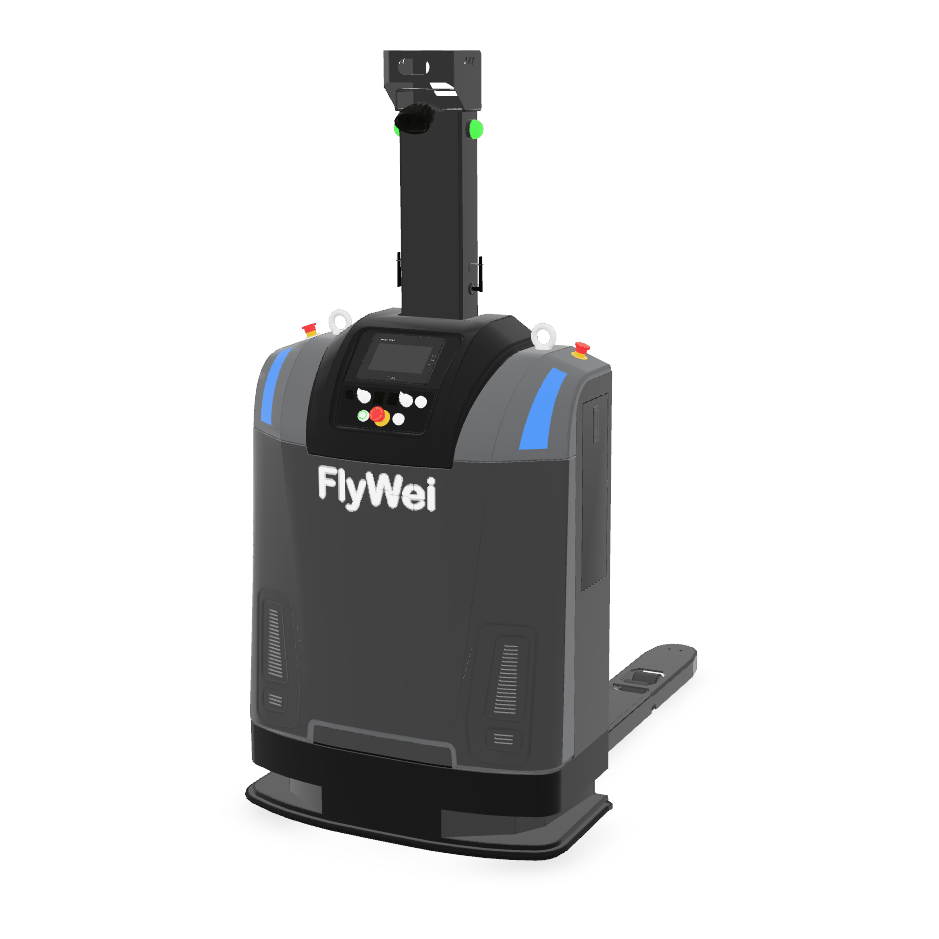 SFL-CBD20 SFL-CBD20 | Pallet truck | 2000 | 205±5 | 1360 | 1970 + 200 | 1720 × 960 × 2090 | 0 to 50 °C, RH 10 to 90%, non-condensing | ||
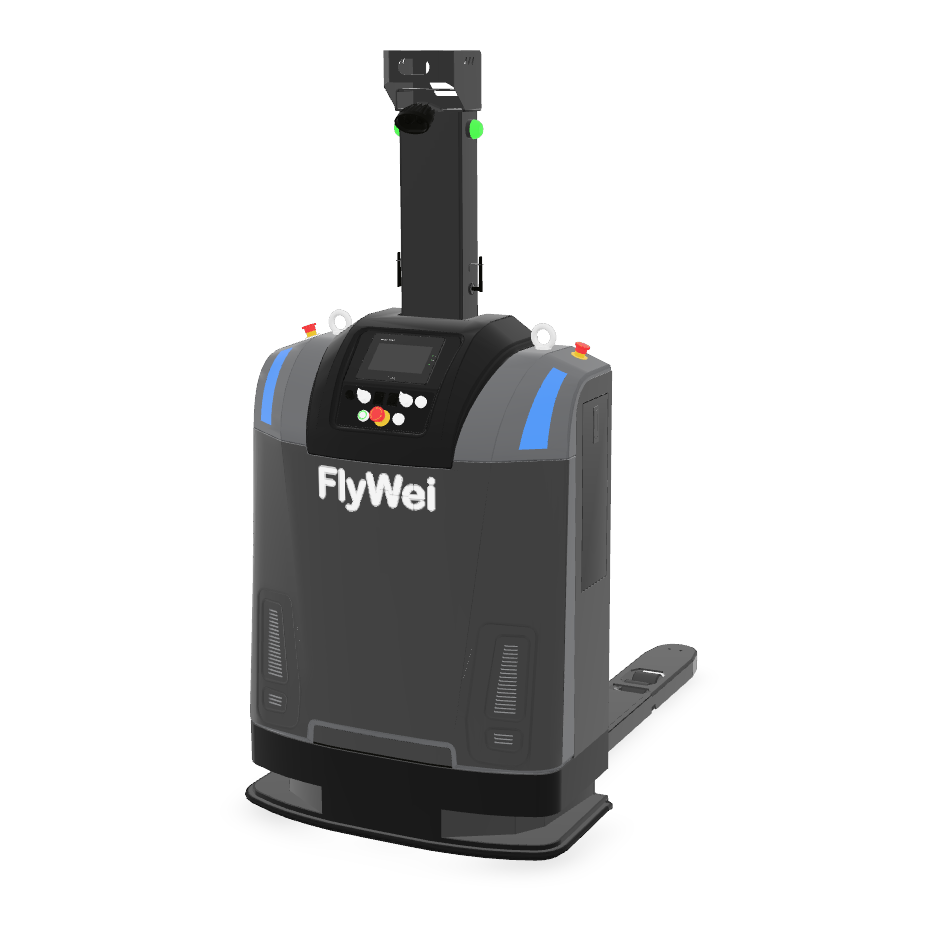 SFL-CBD30 SFL-CBD30 | Pallet truck | 3000 | 205±5 | 1360 | 1970 + 200 | 1720 × 960 × 2090 | 0 to 50 °C, RH 10 to 90%, non-condensing | ||
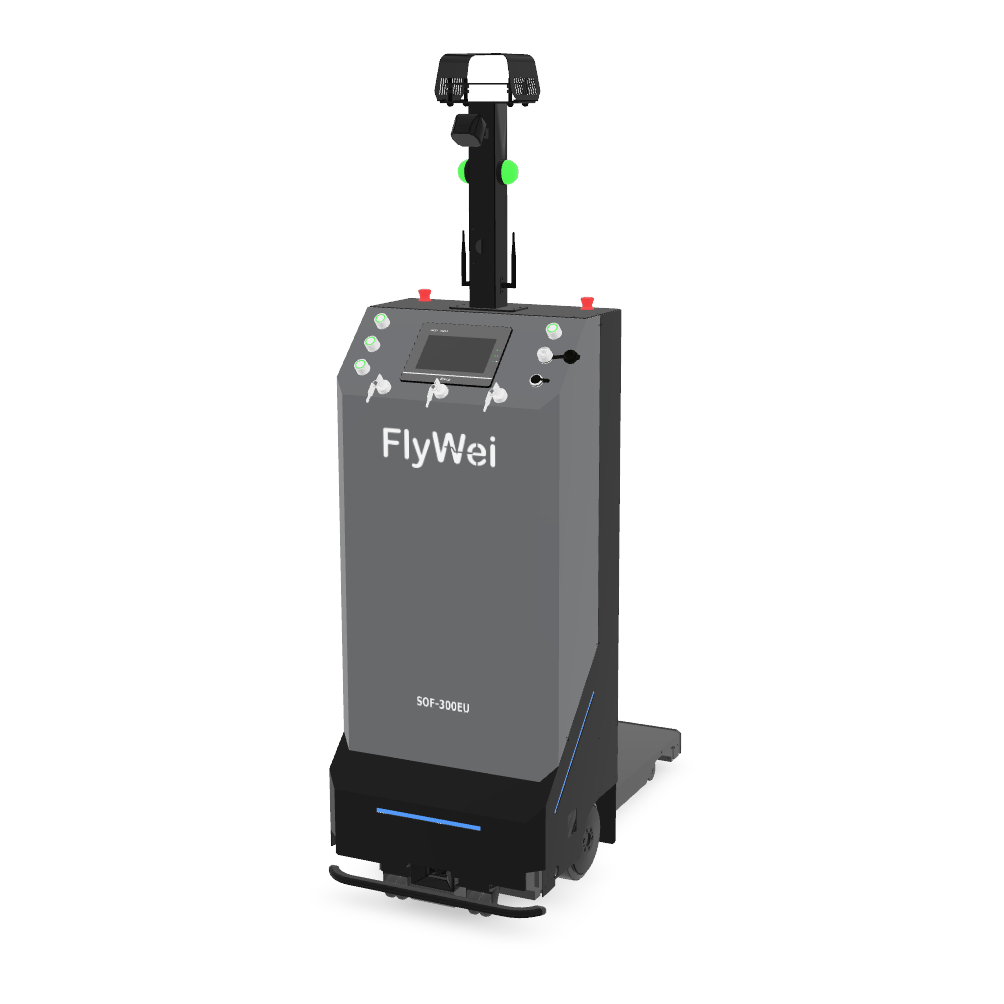 SOF-300EU SOF-300EU | Pallet truck | 300 | 150±5 (default 70) | 650 | 1044 × 500 × 1722 | 0 to 50 °C, RH 10 to 90%, non-condensing | CE | ||
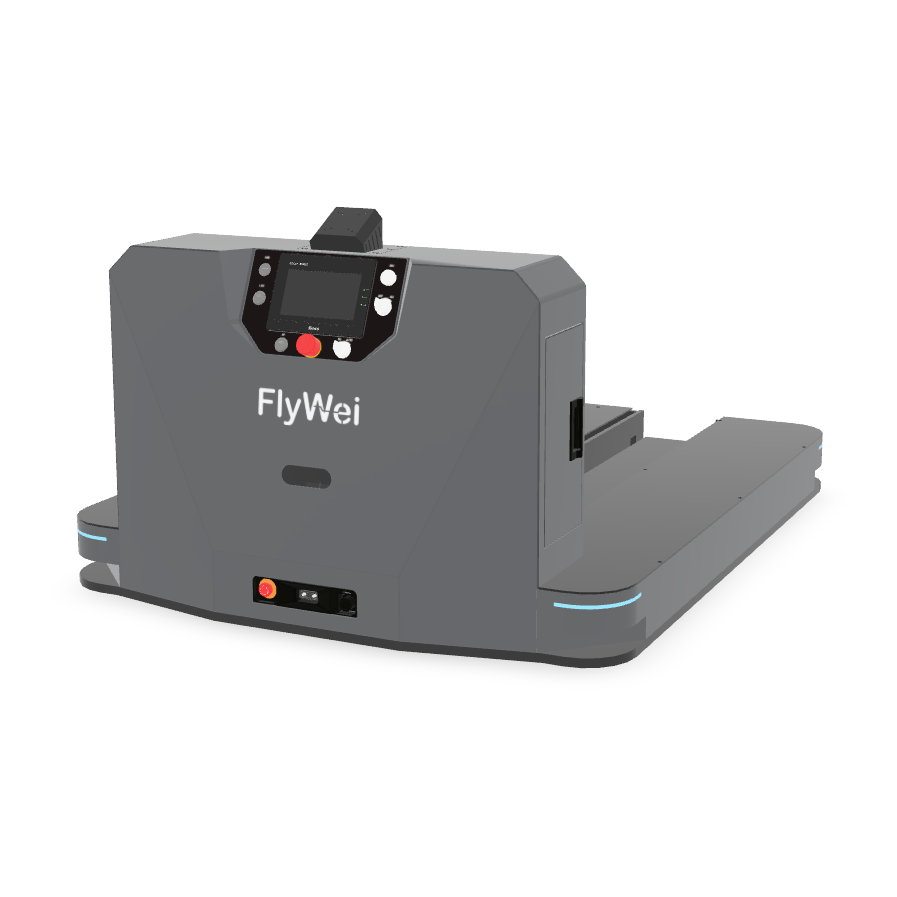 SPT-1000 SPT-1000 | Pallet truck | 1000 | 190 | 900 | 2000 | 1450 × 1200 × 556 | 0 to 50 °C, RH 10 to 90%, non-condensing |
All 18 models, including counterbalance and reach trucks, are on the autonomous forklifts range page, with a side-by-side compare tool.
Where a stacker fits versus counterbalance and reach
The choice is set by three numbers: how high the top beam is, how wide the aisle is, and how heavy the pallet is. Stackers win on aisle width at low beam levels; counterbalance trucks win on payload and dock work; reach trucks win on beam height in a narrower aisle. Ranges below are from the model datasheets in the FlyWei range.
| Class | Payload (kg) | Standard lift (mm) | Ast aisle, 1000 × 1200 pallet (mm) | Best fit |
|---|---|---|---|---|
| Autonomous pallet stacker | 1,000 to 2,000 | 1,600 or 3,000 | 1,966 + 200 to 2,106 + 200 | Ground level and first beam levels, narrow aisles, block stacking, dock-to-rack put-away, moving between aisles |
| Autonomous counterbalance | 1,400 to 3,000 | 3,000 to 4,000 | 2,989 + 200 to 3,417 + 200 | Wide aisles, heavier pallets, inbound and outbound docks, production lines |
| Autonomous reach truck | 1,400 | 3,000 | 2,195 to 2,260 + 200 | Higher beam levels in narrower aisles, rack-to-rack moves, high-density storage |
Choose a stacker when
Pallets go into the bottom beam levels, aisles are under about 2.4 m, the same truck needs to serve several aisles and a conveyor, and you want to add capacity a unit at a time rather than fit a fixed system.
Choose counterbalance when
Loads run to 3,000 kg, the work is at the dock or on a production line, and aisle width is not the constraint. See the counterbalance models on the range page.
Choose reach when
The beams above the stacker's reach are the ones that matter and the aisle is already tight. A mixed fleet with stackers on the low levels and reach trucks above is common, and M4 dispatches to both.
Cold store notes
The standard ambient rating on the datasheets that state one is 0 to 50 °C, RH 10 to 90%, non-condensing. Chilled areas sit at the very bottom of that range; frozen stores are outside it. Low-temperature operation needs equipment rated for the cold: sealed or heated electronics, batteries suited to the temperature, and measures to manage condensation when trucks move between freezer and ambient zones.
The operating temperature range is a key part of the specification and is confirmed during the site survey, along with any temperature transitions between zones, floor condition, racking and aisle layout, and the battery or charging strategy for continuous cold operation. The SSS-1400EU is listed for cold chain logistics.
Read the cold storage automation guideIntegration with your WMS over M4
Every stacker and pallet truck on this page connects to the M4 fleet manager. M4 links to warehouse management, warehouse control and ERP systems by REST API, receives put-away and retrieval orders from them, and dispatches each job to a robot over the VDA 5050 open protocol. It runs mixed fleets, so one WMS order can send a pallet truck to collect from the dock and a stacker to place into the rack.
On the stacker models, 3D obstacle avoidance is standard, pallet recognition is standard on the SSS-2000EU and SOS-1000 and optional on the others, and high-shelf pallet recognition is an option, so the WMS can hand over a location rather than a hand-measured position.
See the M4 fleet managerHire, lease or buy an autonomous pallet stacker
Three ways to put the same robots, M4 software and UK support on your floor. Every route starts with the free site survey and a fleet-sizing quote.
Hire
Long-term rental on rolling terms agreed around your contract horizon, with maintenance, software updates and UK support included. Suited to peaks, fixed-length customer contracts and production-scale trials.
Autonomous forklift hireLease
Fixed 3, 5 or 7-year terms, subject to credit approval, with rates tailored to fleet size, robot mix and site. Robots, M4 software, maintenance and support in one agreement.
Leasing optionsBuy
Outright purchase, quoted per model and per site after the survey. The cost guide explains what drives the figure and the ROI calculator lets you test payback with your own numbers.
Autonomous forklift cost guide · ROI calculatorFrom survey to stacking in 8 to 14 weeks
A UK-based engineer measures aisles, beam heights, floor and temperature zones, and maps the flows. No obligation.
Model mix and fleet size against your volumes, with buy, lease and rental options side by side.
M4 connected to your WMS, WCS or ERP by REST API; robots on VDA 5050; CE, PUWER and LOLER duties covered.
Mapping, safety validation and training on site, then UK-based support with remote monitoring through M4.
Want to see a stacker run before you commit? Demonstrations are available at our European demonstration site, and a UK demonstration facility is planned for 2027. New to the subject? Start with what is an autonomous forklift.
Autonomous pallet stacker FAQs
What is an autonomous pallet stacker?
An autonomous pallet stacker is a driverless stacker truck with a mast that picks up a pallet from the floor, a conveyor or a rack beam and places it into racking or a block stack without an operator. It navigates by laser SLAM on the existing floor, so it needs no wires, tapes or magnets, and it receives its jobs from a fleet manager connected to the warehouse management system. The stacker models in the FlyWei range lift 1,000 to 2,000 kg to a standard 1,600 or 3,000 mm.
What is the difference between an autonomous pallet stacker and an autonomous pallet truck?
Lift height. An autonomous pallet truck raises the forks only far enough to clear the floor (150 to 205 mm on the models in the table) and moves pallets horizontally: dock to storage, line to dispatch, cross-dock. An autonomous pallet stacker has a mast and lifts to 1,600 or 3,000 mm, so it can put pallets into rack beams and stack them. If every move in your flow starts and ends on the floor, a pallet truck is the cheaper machine; if pallets need to go into racking, you need a stacker.
How wide must an aisle be for an autonomous pallet stacker?
Use the right-angle stacking aisle width (Ast) on the model datasheet, not the turning radius alone. For a 1,000 x 1,200 mm pallet with the 1,200 side along the forks, the stacker models in the table quote 1,966 + 200 mm (SSS-1400EU), 2,003 + 200 mm (SSS-2000EU) and 2,106 + 200 mm (SOS-1000), where the 200 mm is the standard safety clearance. Real aisles also depend on pallet overhang, rack depth, floor flatness and where the truck turns in, which is why the free site survey measures your aisles before a model is confirmed.
How high can an autonomous pallet stacker lift?
The stacker models in the FlyWei range have a standard lifting height of 1,600 mm or 3,000 mm, which covers ground level plus the first one or two beam levels of standard adjustable pallet racking. For higher beam levels the autonomous reach trucks (3,000 mm standard) and counterbalance models (3,000 to 4,000 mm standard) are the next step up, and all of them run on the same M4 fleet manager.
Can an autonomous pallet stacker work in a cold store?
The standard datasheet rating on the models that state one is 0 to 50 °C, non-condensing, so chilled areas sit at the bottom of that range and frozen stores are outside it. Freezer duty needs a cold-rated specification: sealed or heated electronics, batteries suited to the temperature, and a plan for condensation when the truck moves between freezer and ambient zones. The operating temperature range is confirmed during the site survey, and the SSS-1400EU is listed for cold chain logistics.
How does an autonomous pallet stacker get its jobs from our WMS?
Through the M4 fleet manager. M4 connects to warehouse management, warehouse control and ERP systems by REST API, receives put-away and retrieval orders from them, and dispatches each job to a robot over the VDA 5050 open protocol. Because M4 runs mixed fleets, a stacker can take the rack put-away while a pallet truck brings the load from the dock, with one order from the WMS covering both moves.
How much does an autonomous pallet stacker cost?
There is no list price, because the cost depends on the model, the fleet size, the WMS integration and any site works, and FlyWei quotes each project after a free, no-obligation UK site survey. You can buy outright, lease over 3, 5 or 7 years subject to credit approval with rates tailored to fleet size, robot mix and site, or take long-term rental on rolling terms. The cost guide explains the drivers and the ROI calculator lets you test payback with your own labour and shift figures.
Is an autonomous pallet stacker the same as a stacker crane?
No. A stacker crane is a rail-guided machine fixed inside one aisle of high-bay racking, usually installed with the racking as part of an automated storage and retrieval system. An autonomous pallet stacker is a free-roaming truck: it drives itself between aisles, docks and conveyors, can be added a unit at a time, and can be moved to another zone or another site. It is also not a palletiser, which is a fixed cell that builds pallets from cases and does not travel.
Which stacker fits your aisles?
Book the free UK site survey and we will measure the aisles, confirm the model and send a fleet-sizing quote with buy, lease and hire options.
UK-based engineers · reply within one business day
Or call 020 3576 6910 or email sales@flywei.co.uk. Updated 23 September 2026.