A warehouse picking app means the lot is captured where the picker stands, not copied off a sheet at a desk later in the shift. Half five in the morning, the chill store door is open and the first pallet for the depot run is going together. The sheet sits on a clipboard. The picker writes the lot in biro, because that is what the clipboard is for, and the pallet goes to the dock. By mid-morning somebody in the office is keying those lots into the batch record from handwriting that spent the early shift in a cold store. One lands wrong. A warehouse picking app earns its keep when the lot a picker touched reaches the batch record and the delivery note without anyone keying it again. The same argument runs at the line end, where a machine moves a cage at one rate on the back shift as well as the day shift, as we set out in line-end flow in FMCG warehouses.
What the pick sheet does not carry
Walk a chilled picking aisle at half five and the paperwork is all in the wrong places. The sheet sits on a clipboard. Lot codes are printed on the case end, in ink that scuffs, at knee height on the bottom layer. The picker reads them bent over, with a cold hand, and writes them into a column that was ruled for quantities. Use-by dates end up in the margin. Allergen lines get built on the same pallet as everything else, and the person building it knows the rule better than the sheet does.
Nobody here is careless. The information exists. It exists on a case end, in the head of whoever read it, and in biro on a clipboard, and not one of those three places is the batch record.
(The clipboard goes back on the nail by the chill store door, which is the only part of this that is reliably indexed.)
The label printer at the packing bench has the delivery note ready before the lot reaches it. Cold hands write badly.
What should a warehouse picking app record at the pick face?
Four things, and the picker should not have to think about any of them. The line being picked against. A quantity confirmed at the pallet rather than at a desk. The lot and the use-by scanned off the case end instead of read and rewritten. And a photograph of the finished line, because the cheapest way to settle a shortage claim is a picture with a time on it.
Everything else follows from those four. The batch record reads the lot. The delivery note reads the quantity. Credit control reads the photograph when a depot says cases were missing.
Traceability is not a preference. The Food Standards Agency expects a food business to know what it sent and where it went, which is a records question long before it is a technology one.
There is a duty on the other side too. Repeated bending to read a code at floor level is the kind of handling the Health and Safety Executive covers in its guidance on musculoskeletal disorders. A scanner at chest height on a trolley is a smaller change than a new rack.
Where we would start in a food plant
We have not put picking on a device in a chilled production plant yet. So here is the honest version of the first morning, which looks the same in any building across the United Kingdom. We are in Wimbledon, in south west London.
We stand at the pick face from the start of the shift and write down every place a fact is born and every place it is written again. (The sheets are never where the process map says they are.) Then we follow one pallet to the depot and note which fields disagree.
Say a plant in Lincolnshire builds forty pallets a day for one retailer, for example. The expensive part is the morning somebody spends reconciling a batch record against a pile of sheets, because a recall question arrives with a clock attached and nobody wants to answer it out of a filing box.
| Step | Keyed twice now | Keyed once |
|---|---|---|
| Pick list | Printed, written on in biro | Issued to the handheld |
| Lot number | Read, then copied by hand | Scanned off the case |
| Quantity | Counted, keyed at the desk | Confirmed at the pallet |
| Proof of the line | Nobody holds one | Photograph taken while picking |
| Batch record | Keyed from cold handwriting | Written as the pick closes |
A pick face that runs dry is a different failure from one that is badly recorded, and we took the first apart in peak replenishment. No new system is needed. The system you already run has to be handed the lot at the moment it is touched, which is what joining systems up means.
The move between chill store and packing
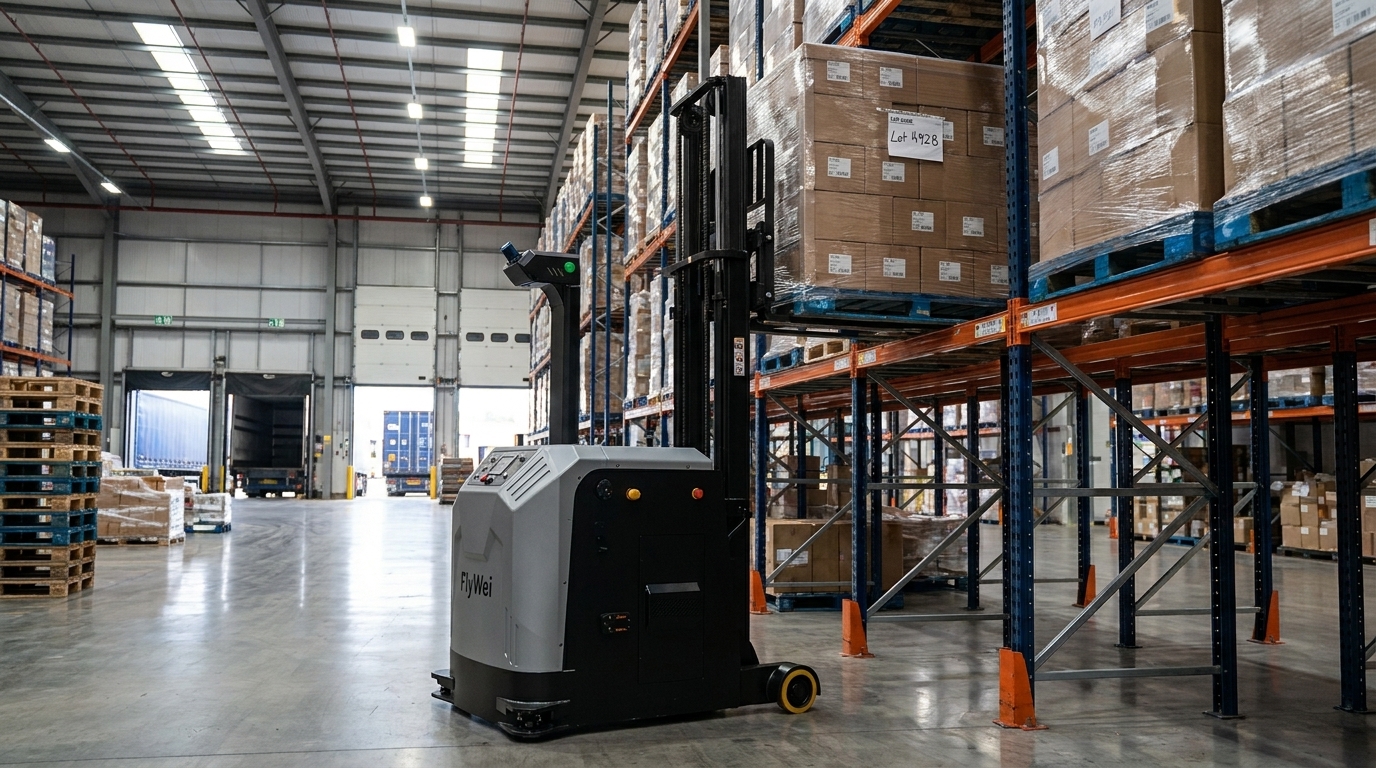
The physical leg is the dullest part and the easiest to hand over. Pallets go from the chill store to the packing hall and back to the dock all day. An autonomous pallet truck can take that leg, but only where the movement order is born in the system that already knows the order. The completion has to be written back to the same place. That is a data question before it is a vehicle question, which is the point of the robot and warehouse system guide. We went over the same ground for forklift fleets in drinks depots, where vehicle movement is also a workplace transport matter.
A warehouse picking app earns its keep when the lot a picker touched reaches the batch record and the delivery note without anyone keying it again.
Hand the clipboard back
I am not convinced the clipboard is the problem. The problem is that we treat the pick face as a place where facts are gathered for later, when it is where they could be settled for good.
A picker standing at a pallet with a scanner knows more about that pallet than anyone will know again. Ask for a confirmation there and the batch record is finished before the pallet is wrapped. Ask for handwriting and you have built a second job in an office and a worse answer.
(Nobody thanks you for a faster truck and a slower batch record.) I would rather buy scanners.
What people ask us about picking on a device
How do warehouse robots update stock levels in real time?
Each finished move sends back a confirmation naming the load, where it left and where it arrived. Your own system posts that as a stock movement, so balances change as pallets move instead of at a shift-end count. A move that fails or gets abandoned has to raise an exception rather than post quietly.
Do I need to replace my WMS to use AMRs?
Usually not. A layer sits above your warehouse system and takes work from it, so that system stays the record of stock and orders. Replacement is only worth a look where nothing can be handed out through an interface or a scheduled export, and even then middleware tends to cost less.
Can pickers use their own phones instead of rugged handhelds?
They can, and in a dry warehouse it often works out well enough. In a chill store, no. Screens fog, batteries drop in the cold, and a dropped phone belongs to the picker. Rugged units with gloved-hand screens cost more once and argue less every morning.
What happens to picking when the wifi drops in a chill store?
The app should hold the picks on the device and send them up when the signal returns. Anything that stops a picker because a link went down will be worked around within a fortnight, and then you are back to biro.
How long does it take to put picking on a device?
A few weeks for most plants, and almost none of that time goes on the app itself. It goes on agreeing which field holds the lot, what a short pick does to the delivery note, and who gets told when a use-by looks wrong. Write those three answers down and the build is short. Skip them and you will be arguing about them live.
Does a picking app slow pickers down?
For the first fortnight it does, and anybody who tells you otherwise has not stood in a chill store in week one. After that the time comes back, mostly in the office rather than the aisle.
Who owns the lot data if we change system later?
You do. Ask for a plain export of picked lines, lots and photographs before anyone installs anything.
If the lot is still being written in biro at your pick face, that is the cheapest thing here to fix.
Book a half day chain map, or read what we join up.
UK based engineers. No obligation. We reply within one business day.