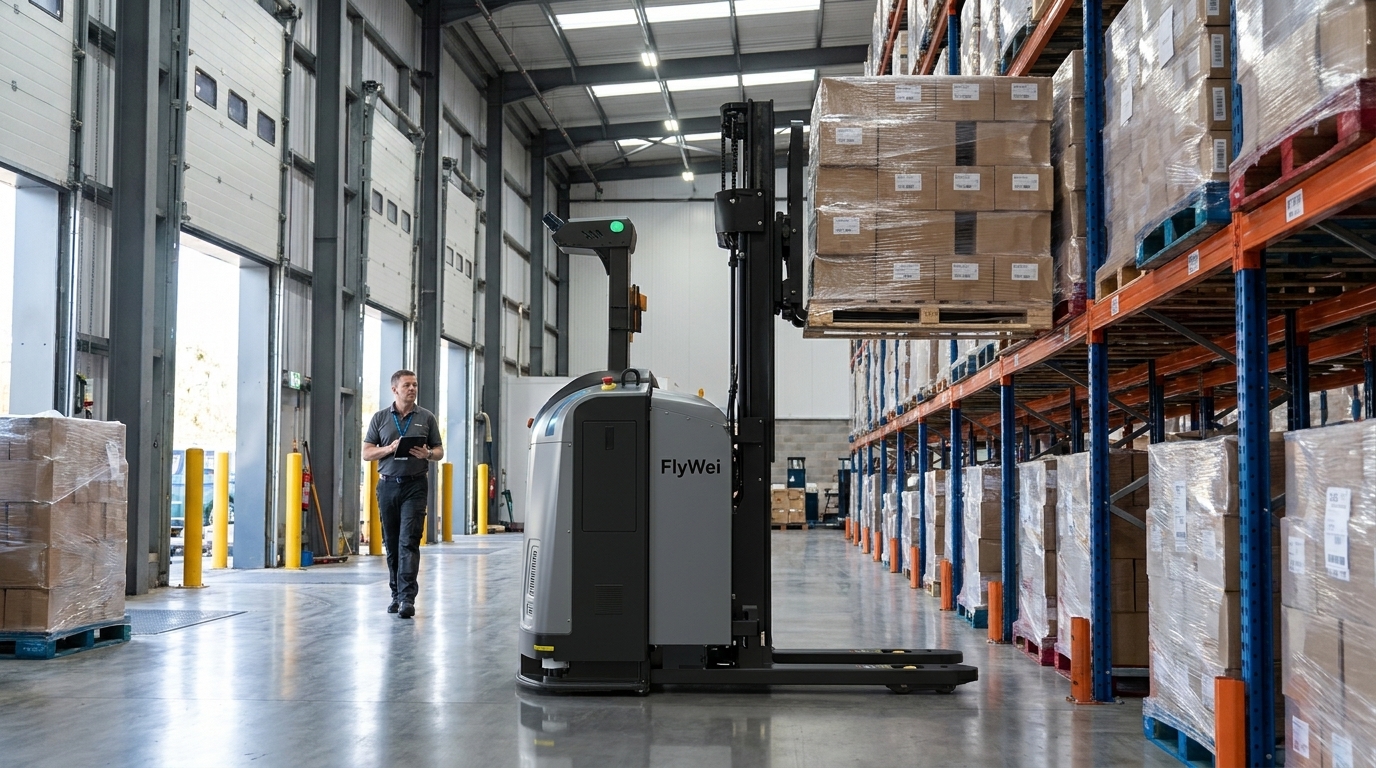
Yes: a LOLER examination for a UK autonomous forklift is required on exactly the same terms as for a manned lift truck. The Lifting Operations and Lifting Equipment Regulations 1998 govern the equipment rather than the presence of a rider, so a driverless truck still needs a thorough examination by a competent person at least every 12 months (LOLER 1998, regulation 9). HSE recorded 24 workers killed by a moving vehicle in 2025/26 (HSE fatal injury statistics), so scrutiny of driverless trucks is rising, not falling. For a warehouse manager running an MHRA-regulated distribution centre, the pain is narrower than the law. Thorough examination reports sit inside the quality system, an auditor expects one per lifting machine, and nobody in the building can yet say who signs the report for a truck with no seat, or which checks replace the driver walk-round that used to generate the daily evidence.
Why this question keeps reaching the quality manager
The confusion is structural, not legal. Most UK warehouse compliance regimes were built around a person sitting on the machine. The rider is the inspector of first resort, the trigger for the daily record, and the holder of the accredited training certificate. Remove the rider and three separate paper trails lose their owner at once, even though the statutory duty has not moved an inch.
LOLER is drafted around lifting equipment and lifting operations. HSE is explicit that a thorough examination is a systematic and detailed examination by a competent person, carried out at set intervals, ending in a written report that names the date the next examination falls due. Nothing in that chain depends on who drives the truck. Masts, chains and forks deteriorate on duty cycles and load.
PUWER is the second trail. HSE notes that thorough examinations of industrial lift trucks fall under LOLER for the lifting parts and PUWER for the rest, including brakes, steering and tyres, and that a scheduled service is not a thorough examination. On a driverless truck the PUWER scope quietly grows, because the scanners, the light curtains, the speed supervision and the stop circuit are now safety-related work equipment in their own right.
The third trail is training. Accredited rider training has no subject once the seat is gone, and in a regulated distribution centre that gap shows up fast in an audit. The duty does not vanish: PUWER requires that anyone using or supervising work equipment is adequately trained, which now means the dispatcher, the technician and the recovery team.
LOLER 1998 applies to autonomous forklifts exactly as it does to manned lift trucks, so a driverless truck still needs a thorough examination at least every 12 months by a competent person.
Lever 1: rebuild the pre-use check around a truck with no driver
The daily walk-round is the cheapest compliance artefact you own, and automation does not remove the need for it. Rewrite it as a named task on the shift plan: one technician or team leader per zone, a fixed checklist covering forks, chains, hydraulics, tyres, decals and the condition of the floor the truck runs on, and a signature that lands in the same file as the examination report. Pair that human check with the machine self-test the truck performs at power-up, and export both to one weekly record. In a pharmaceutical distribution centre this matters twice over, because the quality system expects the evidence to be retrievable by asset, not by person. Set the frequency to match duty cycle rather than calendar habit: a truck running three shifts earns a check at each handover, not once a day.
Lever 2: make the fleet manager produce the examination evidence
An automated truck already records what an examiner wants to know. Lift cycles, mast hours, load weights, fault codes, emergency stop events, aborted missions and charge history all sit in the fleet layer. The technical lever is to turn that from telemetry into a compliance pack. Configure M4 fleet manager to emit a per asset report covering the period since the last thorough examination, with exceptions flagged rather than buried, and hand it to the competent person before the visit rather than after it. Orchestration standards help here: a VDA 5050 interface keeps the mission and error record consistent even when the fleet mixes machine types, which is the usual state of a working site. Keep the pack in the same format every cycle, so a year on year comparison is possible without rebuilding the report. The practical gain is that the examiner arrives with a wear history instead of a guess, and defects get caught on a curve rather than on a failure.
Lever 3: separate LOLER from PUWER and appoint the right competent person
Write the two regimes into separate lines of your maintenance calendar, because they have different scopes, different intervals and often different people. For the LOLER side, HSE is clear that the competent person needs enough practical and theoretical knowledge to detect defects and judge their significance, and should be sufficiently independent that they are not assessing their own maintenance work. In practice that means an accredited lift truck examiner, briefed in advance on the automation so they can test the lifting function under supervised manual control. For the PUWER side, add the safety functions explicitly: scanner fields, protective stop performance, speed supervision and the override procedure. BS EN ISO 3691-4, the standard for driverless industrial trucks, gives you the vocabulary for that scope. Record both outcomes against the same asset number so an auditor sees one machine, not two filing systems.
Lever 4: treat pedestrian segregation as the new operator training
Once nobody is riding the truck, the dominant residual risk is a person in the wrong place. Rebuild the traffic plan before go live: marked robot lanes, controlled crossing points, defined exclusion zones for charging and battery work, and a written rule for what a colleague does when a truck stops in front of them. Train the people who interact with the fleet rather than the people who used to drive it, and keep the register. Floor condition belongs in the same conversation, since an automated truck holds a repeatable line and will find a joint or a worn slab in a way a human driver instinctively steers around. A TR34 compliant surface and an honest survey of the aisles are compliance work, not cosmetics. Our guidance on narrow aisle operation covers how tight the tolerances get, and insurers ask the same questions, as our note on warehouse insurance and autonomous forklifts sets out.
| Compliance item | Manned lift truck | Autonomous forklift | Who owns the evidence |
|---|---|---|---|
| Thorough examination under LOLER 1998 | At least every 12 months | At least every 12 months, unchanged | Site dutyholder |
| Pre-use check | Driver walk-round at shift start | Named technician check plus machine self-test log | Shift supervisor |
| PUWER inspection | Brakes, steering, mast, tyres | Same, plus scanners, speed supervision and stop circuit | Maintenance lead |
| Training duty | Accredited rider training | Dispatch, supervision, recovery and manual override training | Quality system training record |
| Daily operating record | Driver sign off sheet | Fleet manager mission and exception log | Automation owner |
What FlyWei does here
FlyWei is an independent UK systems integrator, so the compliance file is part of the design, not an afterthought bolted on at handover. When FlyWei specifies autonomous forklifts for a regulated distribution centre, the scope includes the examination regime as a deliverable: which asset numbers exist, which fall under LOLER, which PUWER items attach to each, and what the pre-use routine looks like once there is no rider. Because FlyWei integrates machines from several manufacturers rather than selling one range, the examination plan is written around the trucks that actually suit the aisles, the loads and the lift heights on your site.
On the evidence side, FlyWei configures M4 and the robot dispatch software so the fleet reports against asset numbers that match your maintenance system. Mission logs, protective stop events and lift cycle counts come out in a form a competent person and an auditor can both read. Where a truck has to come out of service for examination, dispatch rules reroute the work rather than stalling the aisle.
FlyWei also writes the human side into the plan: who supervises, who recovers a stopped truck, who holds the override, and what each of them is trained on. Our autonomous forklift buyers guide sets out the questions to put to any integrator, and our note on vetting a supplier covers the evidence to ask for before you commit.
Frequently asked questions
Does LOLER apply to an autonomous forklift that never lifts a person?
Yes. LOLER applies to equipment used for lifting loads, not only to equipment that lifts people. A driverless truck lifting pallets is lifting equipment, so the duty applies, at least every 12 months.
Who is the competent person for a driverless forklift examination?
Someone with the knowledge to detect defects and judge their significance, and independent enough that they are not assessing their own maintenance work. Usually an accredited lift truck examiner, briefed on the automation.
Is a thorough examination the same as the annual service?
No. HSE states plainly that a scheduled service or preventive maintenance inspection is not a thorough examination. They can be booked together, but they are separate activities with separate records.
Does PUWER still apply once the truck has no driver?
Yes, and its scope grows. Brakes, steering and tyres remain, joined by the safety sensors, speed supervision and protective stop circuit. PUWER also carries the training duty, which now attaches to supervisors and technicians.
Do our operators still need accredited lift truck training?
Anyone who will take manual control of the truck, including for recovery or examination, needs rider training appropriate to that machine. Colleagues who only work alongside the fleet need task specific training on segregation, crossing points and what to do when a truck stops.
What happens to the examination report if we lease or hire the truck?
The supplier often arranges the examination, but the legal responsibility sits with the organisation using the equipment. Check that a current report exists for each asset before the truck goes to work, and keep a copy in your own file rather than relying on the supplier to produce it at audit.
Does an automated truck need examining more often than a manned one?
The legal minimum is the same, but the duty cycle often is not. Where an automated truck runs more lift cycles per week than the manned truck it replaced, an examination scheme setting a shorter interval is the sensible route, and LOLER expressly allows one.
If thorough examination evidence for driverless trucks is on your Q4 risk register, the fastest way to close it is to look at the aisles and the asset list together.
Book a free 30-minute site survey and we will map which machines fall under LOLER, which PUWER items attach to each, and what the pre-use routine looks like once there is no rider. If you are still scoping the fleet, start with FlyWei autonomous forklifts.
No obligation, and we reply within one business day.