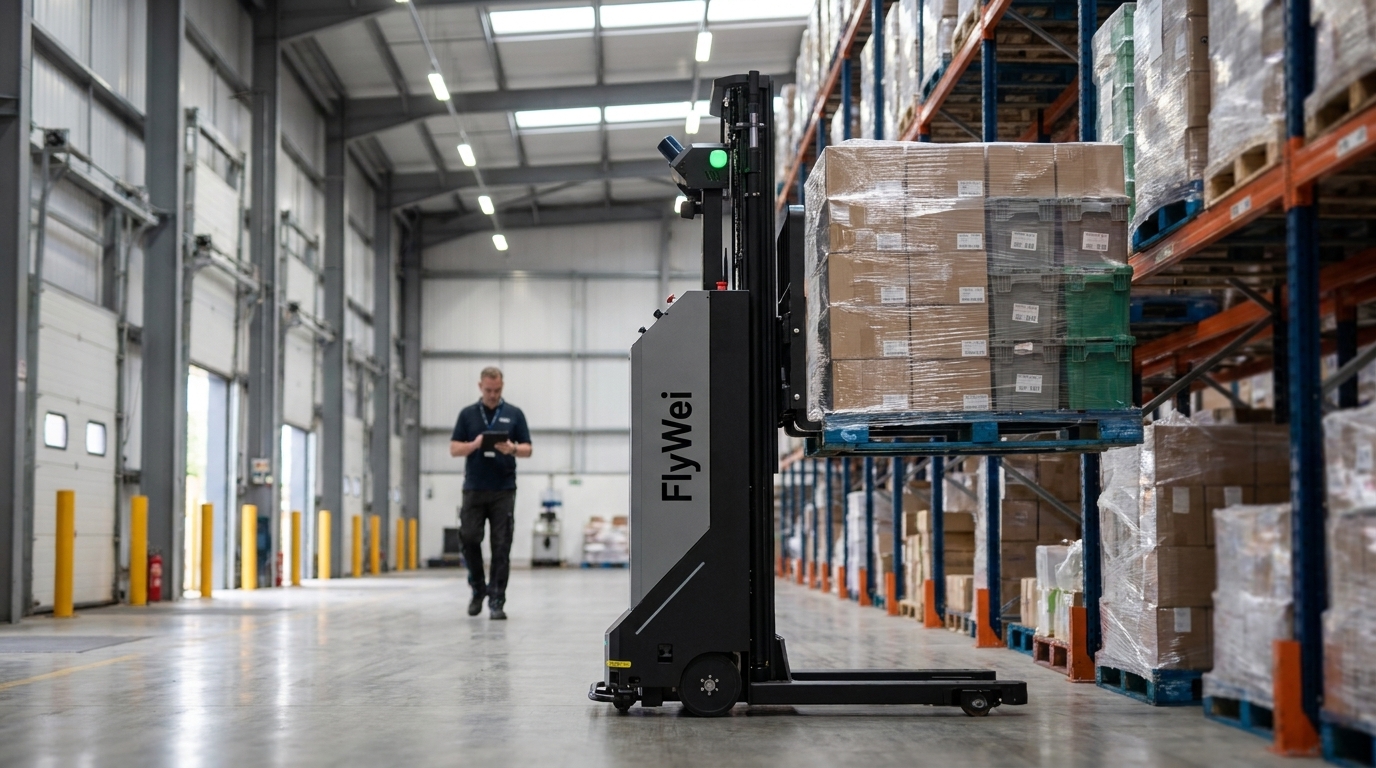
How long robot to ERP integration takes is governed by data access, not by the robots. Commissioning vehicles is rarely the long pole. Mapping order and stock fields, agreeing exception handling and testing against live data are what set the date. In a chilled distribution centre the stakes are sharper than in ambient, because chilled food must be held at 8°C or below under the Food Safety and Hygiene (England) Regulations 2013, so every pallet move has to post against a trusted timestamp rather than a shift-end count. For an operations director running a frozen and chilled site through the winter peak, the pain is not robot capability. It is a go-live date that cannot be committed to, because nobody can say when the existing warehouse system will expose open work in a form the fleet layer can consume, and nobody owns the exception paths when a pallet is rejected at the freezer door.
Why integration dates slip
The robot schedule is easy to see and easy to plan. Vehicles are ordered, delivered, mapped against the site and driven through acceptance runs. Every step has a visible owner and a date. The data schedule has neither, and that is where the programme lives. Most of the work in robot to ERP integration happens in spreadsheets and test systems long before a truck moves a pallet on its own.
Three things cause the slip. The first is that the existing warehouse or business system was never designed to publish work to a third party. Exposing open tasks in a form a fleet layer can consume may mean a documented interface, a scheduled export, or middleware in between. Which applies is usually unknown when the robot order is signed, and our note on what to do when a system has no API covers the routes.
The second is master data. Autonomous handling needs locations that are uniquely identified and balances that can be trusted. Where aisle naming has drifted over years of racking changes, automating on top multiplies the error instead of removing it. The checks worth running first are in our guide to warehouse readiness for integration.
The third is exception ownership. The happy path is quick to agree. What consumes the calendar is deciding what happens when a pallet is rejected at the freezer door, a location is blocked, or the link to the business system drops mid-task. Each needs a rule, an owner and a test, and traceability obligations make a late or duplicated posting a compliance matter rather than an annoyance.
Lever 1: run the data workstream ahead of the vehicles
The operational fix is sequencing. Start the field mapping as soon as the scope is agreed, not when the first truck lands. Three artefacts do most of the work. The first is a field map: which system field carries the order, the location, the load identifier and the priority, and what each one is called on both sides. The second is a location register that proves every pick face, drop point, charge bay and freezer airlock has one unique identifier that both systems agree on. The third is a movement contract that states exactly which message triggers a stock posting, and what must be true for that posting to be accepted.
In a chilled site, add the temperature-sensitive flows to that map early. A move from the freezer to a chilled marshalling lane behaves differently from an ambient putaway, because dwell time matters and the destination may be rejected on arrival. Teams that produce these three artefacts before the vehicles arrive find that robot commissioning, not the data work, becomes the thing everyone waits for. That is the right way round.
Lever 2: put a fleet manager between the business system and the trucks
Autonomous forklifts do not connect to a business system directly, and they should not. The durable architecture puts a fleet management layer in between. It takes work from the warehouse system over one documented interface, converts each task into routes, traffic rules and vehicle assignments, and writes completions and load confirmations back so the existing system stays the record of stock. The M4 fleet manager plays that role, and it means the business system integrates once, against one layer, rather than once per vehicle type.
Below that layer, the VDA 5050 open standard carries orders down to the vehicles and state back up over MQTT and JSON messages. Because the standard is vendor-neutral, a mixed fleet does not require a bespoke interface per machine. This matters to the timeline more than it first appears. Integration scope that is bounded to one interface can be specified, built and tested as a single piece of work. Scope that fans out across several machine interfaces cannot be, and that is where multi-month overruns come from.
Lever 3: schedule PUWER and ISO 3691-4 verification in parallel
Safety and conformity work is often treated as a gate at the end. Run it alongside the data workstream instead and it stops being on the critical path. Autonomous industrial trucks are designed and assessed against ISO 3691-4, which covers driverless trucks and their systems, including the detection fields, protective stops and the rules for areas shared with pedestrians. The certification belongs to the machine and its safety controller, independent of any navigation software above it.
On the operator side, the equipment must also satisfy the Provision and Use of Work Equipment Regulations, made as PUWER 1998. That means suitability for the actual conditions, which in a frozen store includes condensation, floor condition and reduced visibility at the airlock, plus inspection, maintenance and training records. The practical move is to run the site risk assessment, the pedestrian segregation plan and the operator briefings during the weeks the field mapping is in progress. None of it needs the final interface to be finished, and guidance from bodies such as Logistics UK and BSI is available well before go-live.
Lever 4: write the exception rules before you agree a cutover date
A cutover date agreed before the exception rules exist is a guess. Write the rules first, then the date follows from them. Start with the five that bite in every chilled operation: a rejected pallet at the receiving airlock, a blocked or occupied destination, a short or damaged load, a vehicle fault mid-task, and a dropped link to the business system. For each one, state what the fleet layer does, what the operator sees, what gets posted, and who clears it.
The link failure deserves particular care. A well-designed integration degrades rather than stops: robots finish the task already issued and then hold safely, while the fleet layer queues completions and replays them once the link returns. Ask how duplicate messages are prevented on reconnection, because a movement posted twice against a batch-controlled product is the kind of error a cold chain audit will find. Testing these five paths against live data, not a tidy sample file, is the step that most often reveals a missing field and the step most often cut when a programme runs late.
| Workstream | What decides its length | Who owns it | Agree before kick-off |
|---|---|---|---|
| Field mapping | Whether the existing system exposes open work in a documented form | Site IT plus the integrator | The field map and the movement contract |
| Master data clean-up | How far location naming and stock balances have drifted | Warehouse operations | One unique identifier per location |
| Exception handling | Number of flows that can fail and who clears each one | Operations plus IT jointly | Five named exception rules |
| Testing against live data | Whether a test environment exists at all | Site IT | Access to a test system, not a sample file |
| Vehicle commissioning | Site mapping, charge infrastructure, acceptance runs | The integrator | Floor survey and charge positions |
| Safety verification | Pedestrian segregation and PUWER evidence | Site health and safety | Risk assessment scope |
Robot to ERP integration time is set by data access, not by the robots. Mapping order and stock fields, agreeing exception handling and testing against live data are the long poles.
What FlyWei does here
FlyWei, the UK partner of SEER Robotics, supplies, installs, leases and supports autonomous forklifts, AMRs and lifting robots across the UK, and connects them to the warehouse or business system a site already runs. SEER Robotics builds the machines. FlyWei does the survey, the installation and the integration work, and supports the fleet afterwards.
For a chilled or frozen operation, that starts with a site survey rather than a catalogue. We walk the flows that matter, usually the freezer to marshalling moves and the inbound airlock, and check floor condition, aisle geometry and charge positions. On the data side, we produce the field map and the movement contract with site IT, and we are explicit about which side each party builds. The M4 fleet manager sits between the warehouse system and the vehicles, so the integration is specified once, and the robot dispatch software handles the task sequencing above it.
Where a site has no test environment, we say so early, because that single fact moves a date more than anything else on the plan. Around the major logistics clusters such as Magna Park, DIRFT and Daventry, the phased approach is the usual one: one flow goes live first, and the rest follow once the exception rules are proven in production.
Frequently asked questions
What is the single biggest factor in how long robot to ERP integration takes?
Whether the existing system exposes open work through a documented interface, and whether a test environment exists. With neither, most of the programme goes on building a route for the data.
Can we start before the master data is clean?
Partly. Scope, field mapping and exception rules can be agreed while data is corrected. Do not go live on locations that are not uniquely identified, because automation propagates those errors.
Does a cold store take longer to integrate than an ambient warehouse?
The interface work is much the same. Exception design and testing take longer, because temperature-controlled flows have more ways to fail and a posting that arrives late or twice must be caught.
What happens to work in progress if the network drops mid-task?
A well-designed integration degrades rather than stops. Vehicles complete the task already issued and hold in a safe state, while the fleet layer queues completions and replays them. Ask how duplicate postings are prevented.
Who should own the integration on our side?
Name one owner in IT for the interface and one in operations for the exception rules. Unassigned exception ownership is what surfaces missing fields late, after the change freeze has started.
How does this relate to robot commissioning time?
They overlap but are separate. Commissioning covers site mapping, charge infrastructure and acceptance runs, set out in our note on autonomous forklift commissioning. Integration covers the data path, and the date follows whichever finishes last.
If an automation go-live date you cannot defend is sitting on your Q4 risk register, the fix is to look at the flows and the data together.
Book a free 30-minute site survey and we will walk your highest-volume chilled flow, check what your existing system can expose today, and tell you which workstream is genuinely on your critical path. The M4 fleet manager sits between your warehouse system and the vehicles.
No obligation, and we reply within one business day.